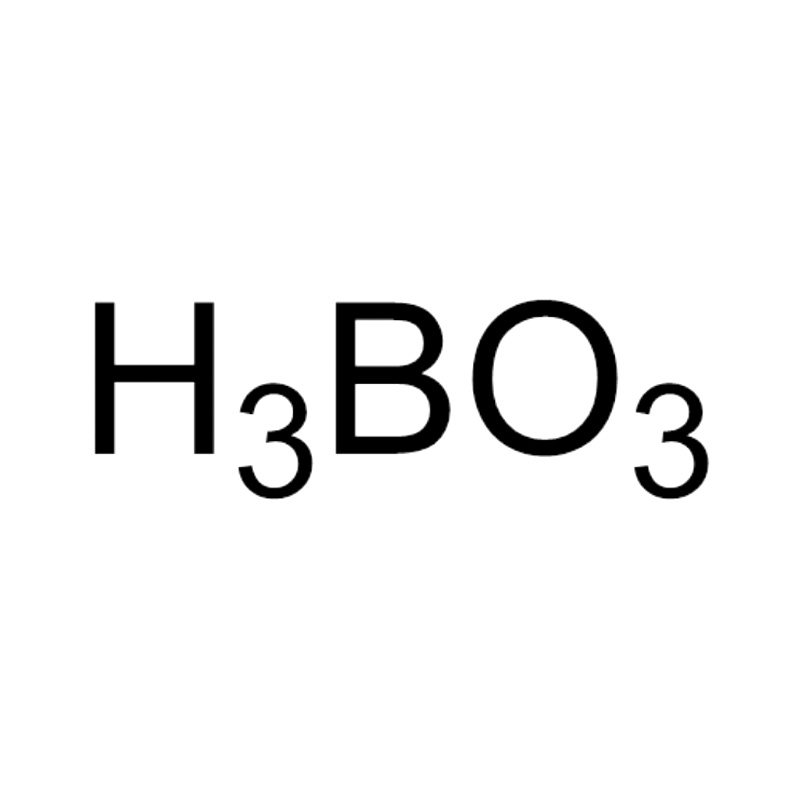

Orthoboric acid CAS#10043-35-3
High-Purity Orthoboric Acid – Stable white crystalline powder with excellent chemical purity and consistent performance.
Excellent Solubility & Reactivity – Readily soluble in water, alcohol, glycerin, and organic solvents, with solubility increasing significantly at higher temperatures.
Thermal Transformation Capability – Dehydrates stepwise to metaboric acid, pyroboric acid, and boron oxide upon heating, suitable for high-temperature processing applications.
Weak Lewis Acid Properties – Mild acidity with good compatibility in formulations, easily purified by recrystallization for high-grade industrial and laboratory use.
Products Description of Orthoboric Acid CAS#10043-35-3
Orthoboric acid, commonly known as boric acid (H₃BO₃), is an inorganic crystalline compound formed by dissolving boron trioxide in water. Among boric acids, it has the highest water content and the greatest stability. It appears as white, shiny powdery or flaky crystals, is odorless, slightly bitter, and feels smooth to the touch. Boric acid is soluble in water, ethanol, glycerin, ethers, and essential oils, and its aqueous solution is weakly acidic with typical Lewis acid behavior.
When heated, orthoboric acid gradually dehydrates: forming metaboric acid at 70–100 °C, pyroboric acid at 150–160 °C, and boron oxide (B₂O₃) at about 300 °C. Its solubility in water increases markedly with temperature. The presence of hydrochloric, citric, or tartaric acid enhances its solubility, allowing purification by recrystallization.
Parameters
| Melting point | 160 °C (dec.) (lit.) |
| Boiling point | 219-220 °C (9.7513 mmHg) |
| density | 1.440 g/cm3 |
| bulk density | 400-600kg/m3 |
| vapor pressure | 2.6 mm Hg ( 20 °C) |
| refractive index | n20/D 1.330-1.340 |
| storage temp. | Store at +5°C to +30°C. |
| solubility | H2O: soluble |
| pka | 8.91±0.43(Predicted) |
| form | working solution |
| color | ≤10(APHA) |
| Specific Gravity | 1.435 |
| PH | 3.6-4.4 (25℃, saturated solution in H2O) |
| Odor | Odorless |
| PH Range | 3.8 - 4.8 |
| Water Solubility | 49.5 g/L (20 ºC) |
| Sensitive | Hygroscopic |
| λmax | λ: 260 nm Amax: 0.05 |
| λ: 280 nm Amax: 0.05 | |
| Merck | 141,336 |
| BRN | 1697939 |
| Exposure limits | ACGIH: TWA 2 mg/m3; STEL 6 mg/m3 |
| InChIKey | KGBXLFKZBHKPEV-UHFFFAOYSA-N |
| LogP | -1.09 at 22℃ |
| CAS DataBase Reference | 10043-35-3(CAS DataBase Reference) |
| NIST Chemistry Reference | B(OH)3(10043-35-3) |
| EPA Substance Registry System | Orthoboric acid (10043-35-3) |
| Absorption | ≤0.05 at 260 in H2O at 1M |
| ≤0.05 at 280 in H2O at 1M |
Safety Information
| Hazard Codes | Xi,T,Xn |
| Risk Statements | 36/37/38-60-63-62-61 |
| Safety Statements | 26-36-53-45-37/39-36/37/39-22-24/25-23 |
| WGK Germany | 2 |
| RTECS | ED4550000 |
| F | 3 |
| TSCA | Yes |
| HS Code | 28100090 |
| Hazardous Substances Data | 10043-35-3(Hazardous Substances Data) |
| Toxicity | LD50 orally in rats: 5.14 g/kg (Smyth). |

Product Application of Orthoboric Acid CAS#10043-35-3
Orthoboric acid is widely used in molecular biology research, including DNA and RNA purification, preparation of biological buffers, and as a reagent in biochemical experiments. It is also applied in plant science to evaluate the effects of boron toxicity on crop growth and antioxidant systems, such as in maize root studies. In biomedical research, boric acid is used to investigate boron absorption and distribution in animal tissues, including studies on uptake in different regions of the brain after injection.
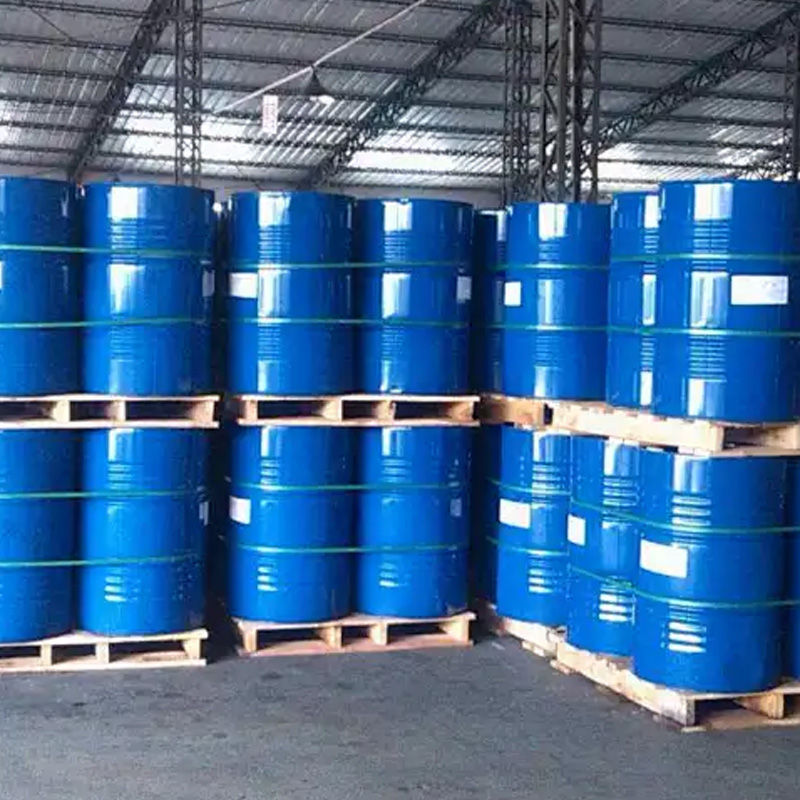
Factory and Equipment Show