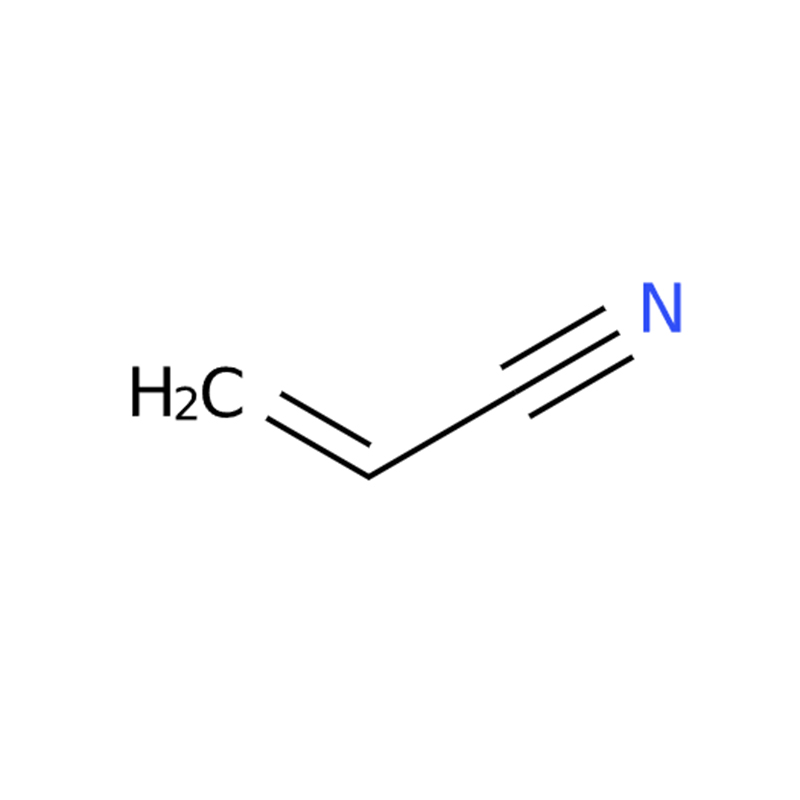
Acrylonitrile CAS#107-13-1
Key Industrial Chemical Intermediate: Acrylonitrile serves as an essential building block in the production of numerous high-value chemicals, including pharmaceuticals, antioxidants, dyes, and specialty organic compounds.
Versatile Raw Material for Polymer Production: It is widely used in the manufacture of acrylic fibers, modacrylic fibers, synthetic rubber, ABS plastics, and SAN resins, supporting a broad range of industrial applications.
Strong Demand Across Multiple Industries: Due to its critical role in producing engineering plastics and advanced materials, acrylonitrile continues to experience growing demand in the chemical and manufacturing sectors.
Broad End-Use Applications: Products derived from acrylonitrile are extensively used in automotive components, construction materials, household goods, packaging products, luggage, and business equipment, highlighting its commercial versatility.
Acrylonitrile CAS#107-13-1
Acrylonitrile is a colorless, flammable liquid, and its vapors may form explosive mixtures when exposed to open flames. It does not occur naturally in the environment and is produced in large quantities by various chemical industries, particularly in the United States, where demand has continued to rise in recent years.
As a highly produced unsaturated nitrile, acrylonitrile is an important raw material for the manufacture of plastics, synthetic rubber, and acrylic fibers. Although it was previously used as a pesticide fumigant, all such applications have now been discontinued.
Acrylonitrile is a key chemical intermediate widely used in the production of pharmaceuticals, antioxidants, dyes, and various organic synthesis products. Its largest consumption is in industries producing acrylic and modacrylic fibers, as well as high-impact ABS plastics.
In addition, acrylonitrile is utilized in the production of styrene-acrylonitrile (SAN) plastics, which are commonly applied in automotive components, household goods, packaging materials, business equipment, luggage, and construction materials. Related derivatives such as adiponitrile are further used in the manufacture of nylon, dyes, pharmaceuticals, and pesticides.
Acrylonitrile Chemical Properties
| Melting point | -83 °C (lit.) |
| Boiling point | 77 °C (lit.) |
| density | 0.806 g/mL at 20 °C |
| vapor density | 1.83 (vs air) |
| vapor pressure | 86 mm Hg ( 20 °C) |
| refractive index | n20/D 1.391(lit.) |
| Fp | 32 °F |
| storage temp. | 2-8°C |
| solubility | 73g/l |
| form | Liquid |
| color | Clear |
| Odor | Mild pyridine-like odor at 2 to 22 ppm |
| PH | 6.0-7.5 (50g/l, H2O, 20℃) |
| Odor Threshold | 8.8ppm |
| explosive limit | 2.8-28%(V) |
| Water Solubility | Soluble. 7.45 g/100 mL |
| Sensitive | Light Sensitive |
| Merck | 14131 |
| BRN | 605310 |
| Henry's Law Constant | 1.30 at 30.00 °C (headspace-GC, Hovorka et al., 2002) |
| Dielectric constant | 33.01 |
| Exposure limits | NIOSH REL: TWA 1 ppm, 15-min C 1 ppm, IDLH 85 ppm; OSHA PEL: TWA 2 ppm, 15-min C 10 ppm; ACGIH TLV: TWA 2 ppm. |
| Major Application | agriculture |
| environmental | |
| InChI | 1S/C3H3N/c1-2-3-4/h2H,1H2 |
| InChIKey | NLHHRLWOUZZQLW-UHFFFAOYSA-N |
| SMILES | C=CC#N |
| LogP | 0.017 at 21℃ |
| CAS DataBase Reference | 107-13-1(CAS DataBase Reference) |
| IARC | 2B (Vol. 71) 1999 |
| NIST Chemistry Reference | 2-Propenenitrile(107-13-1) |
| EPA Substance Registry System | Acrylonitrile (107-13-1) |
Safety Information
| Hazard Codes | F,T,N,Xn |
| Risk Statements | 45-11-23/24/25-37/38-41-43-51/53-39/23/24/25-62-63 |
| Safety Statements | 53-9-16-45-61-36/37 |
| RIDADR | UN 1093 3/PG 1 |
| OEB | D |
| OEL | TWA: 1 ppm, Ceiling: 10 ppm [15-minute] [skin] |
| WGK Germany | 3 |
| RTECS | AT5250000 |
| F | 8 |
| Autoignition Temperature | 481 °C |
| TSCA | TSCA listed |
| HazardClass | 3 |
| PackingGroup | I |
| HS Code | 29261000 |
| Hazardous Substances Data | 107-13-1(Hazardous Substances Data) |
| Toxicity | LD50 orally in rats: 0.093 g/kg (Smyth, Carpenter) |
| IDLA | 60 ppm |
Product Application of Acrylonitrile CAS#107-13-1
Acrylonitrile is widely used in the production of acrylic fibers, resins, and surface coating materials. It also serves as an important intermediate in the manufacture of pharmaceuticals and dyes, and is used as a polymer modifier as well as a fumigant.
In addition, acrylonitrile may be generated in fire effluent gases due to the pyrolysis of polyacrylonitrile-based materials.
Studies have shown that acrylonitrile can migrate from acrylonitrile–styrene copolymer and acrylonitrile–styrene–butadiene copolymer containers when they are filled with food-simulating solvents such as water, 4% acetic acid, 20% ethanol, and heptane, and stored for periods ranging from 10 days to 5 months. This release increases with rising temperature and is mainly attributed to residual acrylonitrile monomers remaining in the polymer materials.