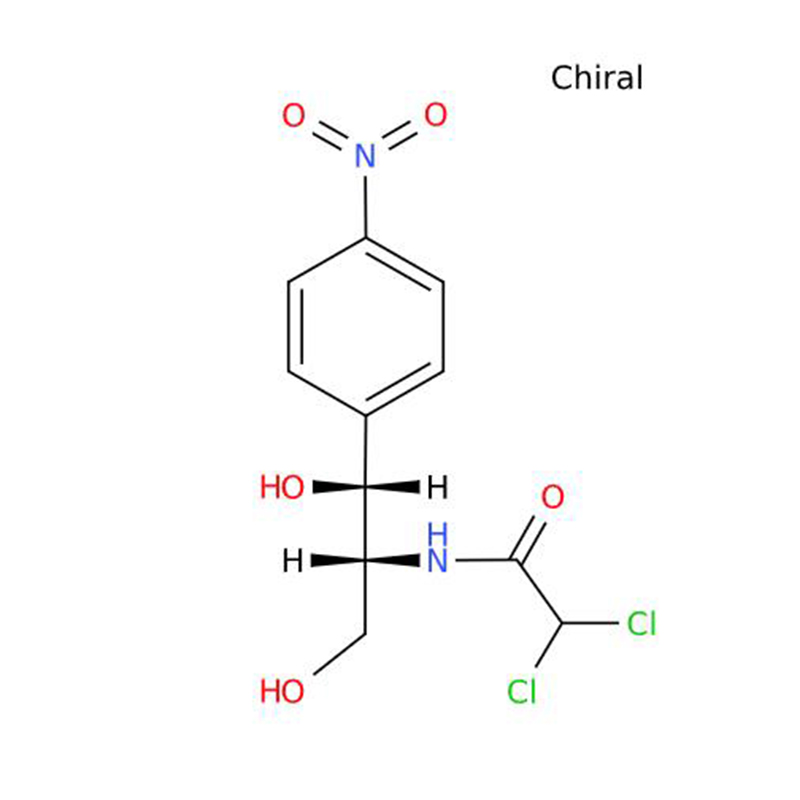


Chloramphenicol CAS#56-75-7
Broad-Spectrum Antibacterial Activity: Offers effective growth inhibition against a wide range of bacteria, making it valuable for pharmaceutical applications.
High Chemical Stability: Remains relatively stable in neutral and weakly acidic aqueous solutions, supporting reliable formulation performance.
Excellent Solvent Compatibility: Easily soluble in methanol, alcohol, acetone, and ethyl acetate, enabling flexible use in various processing systems.
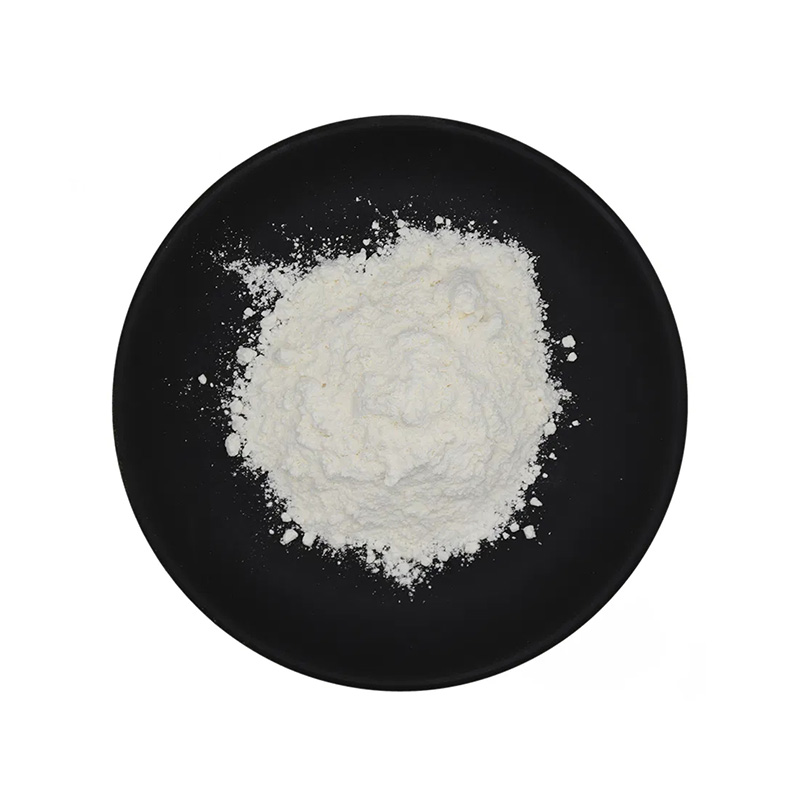
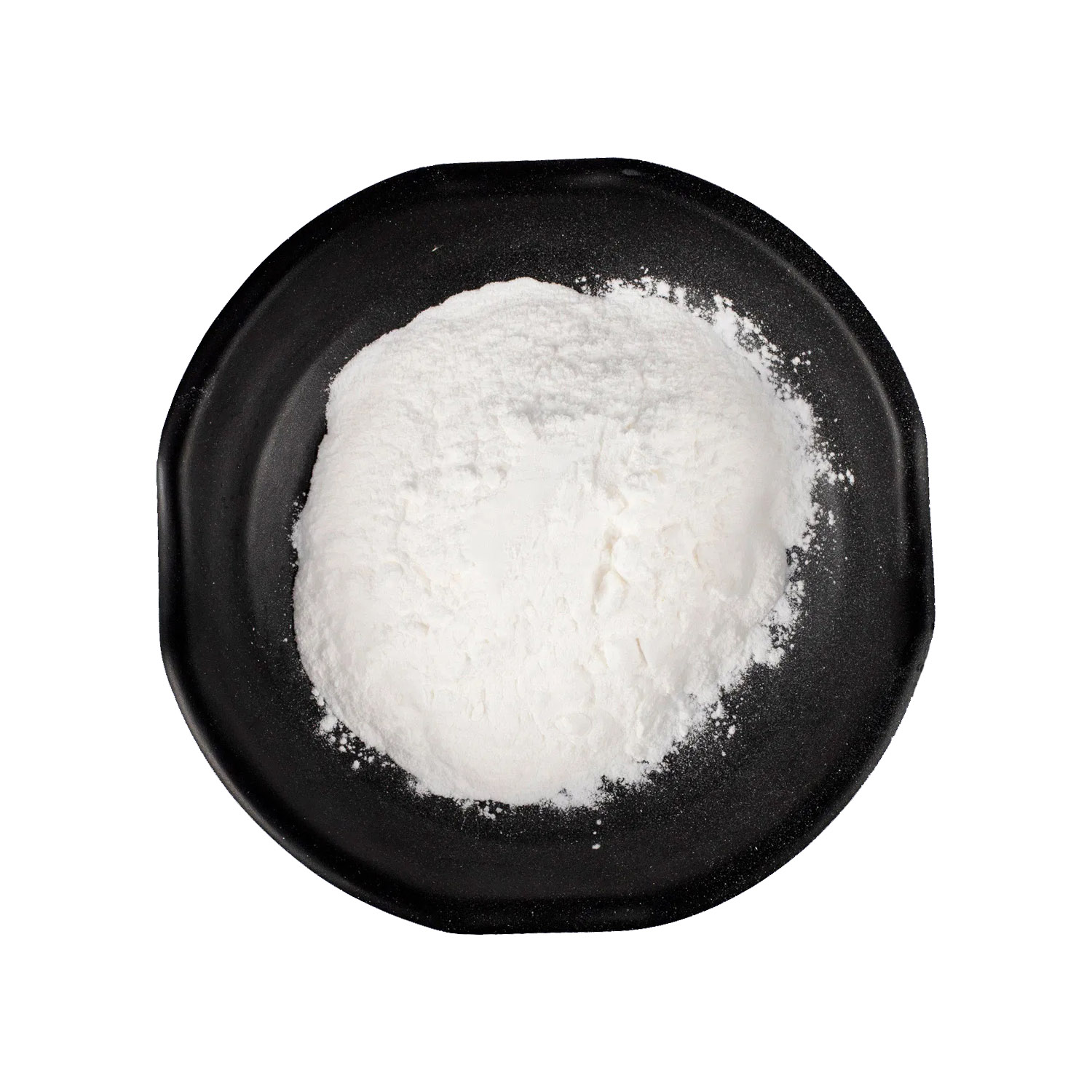
Reliable Pharmaceutical Intermediate Quality: Available as white to slightly yellow needle-like or flaky crystals, ensuring consistent physical characteristics for industrial and research use.
Product Description of Chloramphenicol CAS# 56-75-7
Chloramphenicol is a broad-spectrum antibiotic originally produced by Streptomyces chlorinus, known for its ability to inhibit bacterial growth. Natural chloramphenicol exists as the L-isomer (also called levomycin). The synthetic product appears as white or slightly yellow needle-like or flaky crystals, is odorless, and has an intensely bitter taste. It is slightly soluble in water, ether, and chloroform, readily soluble in methanol, alcohol, acetone, and ethyl acetate, and insoluble in benzene and petroleum ether.
The compound remains relatively stable in neutral or weakly acidic aqueous solutions, but it can easily lose its activity under alkaline conditions. Synthetic chloramphenicol is a racemic mixture consisting of both the L-isomer and D-isomer. Since the D-isomer has no antibacterial activity, the effectiveness of the synthetic product is only about half that of the natural form.
Parameters
| Melting point | 148-150 °C(lit.) |
| alpha | 19.5 º (c=6, EtOH) |
| Boiling point | 644.9±55.0 °C(Predicted) |
| density | 1.6682 (rough estimate) |
| refractive index | 20 ° (C=5, EtOH) |
| Fp | 14 °C |
| storage temp. | Keep in dark place,Inert atmosphere,2-8°C |
| solubility | absolute ethanol: soluble5-20mg/mL (as a stock solution) |
| form | powder |
| pka | 11.03±0.46(Predicted) |
| color | white |
| Water Solubility | 2.5 g/L (25 º C) |
| Merck | 142077 |
| BRN | 2225532 |
| BCS Class | 3 |
| InChIKey | WIIZWVCIJKGZOK-RKDXNWHRSA-N |
| LogP | 1.14 |
| CAS DataBase Reference | 56-75-7(CAS DataBase Reference) |
| NIST Chemistry Reference | Chloramphenicol(56-75-7) |
| IARC | 2A (Vol. Sup 7, 50) 1990 |
| EPA Substance Registry System | Chloramphenicol (56-75-7) |
Safety Information
| Hazard Codes | T,F |
| Risk Statements | 45-11-39/23/24/25-23/24/25 |
| Safety Statements | 53-45-16-36/37 |
| RIDADR | 2811 |
| WGK Germany | 3 |
| RTECS | AB6825000 |
| F | 45726 |
| TSCA | Yes |
| HazardClass | 3 |
| HazardClass | IRRITANT |
| HS Code | 29414000 |
| Hazardous Substances Data | 56-75-7(Hazardous Substances Data) |
| Toxicity | LD50 oral in rat: 2500mg/kg |

Product Application of Chloramphenicol CAS# 56-75-7
Chloramphenicol is a broad-spectrum antibacterial antibiotic and has traditionally been considered a first-line option for the treatment of typhoid and paratyphoid fever. It is also one of the specific drugs used for anaerobic infections, as well as for the treatment of various infectious diseases caused by susceptible microorganisms.
Due to its potential for serious adverse reactions, its clinical use has gradually decreased. Its antibacterial spectrum, pharmacological effects, and applications are consistent with chloramphenicol. It is used in the treatment of infections caused by organisms such as Salmonella typhi, Shigella dysenteriae, Escherichia coli, Haemophilus influenzae, Brucella, and Pneumococcus, and is widely applied as an antibiotic anti-infective raw material.