
Lead monoxide CAS#1317-36-8
High Purity: Lead(II) oxide industrial product has a purity of ≥99%, ensuring reliable performance in various applications.
Thermal Stability: With a melting point of 888°C and a boiling point of 1470°C (decomposes), it is suitable for high-temperature processes.
Chemical Solubility: Insoluble in water but soluble in acetic acid and nitric acid, and slightly soluble in alkali, providing versatility for chemical reactions.
Stability and Safety: The compound is stable under normal conditions and resistant to decomposition, though it is incompatible with strong reducing agents and concentrated acids.
Products Description of Lead Monoxide CAS#1317-36-8
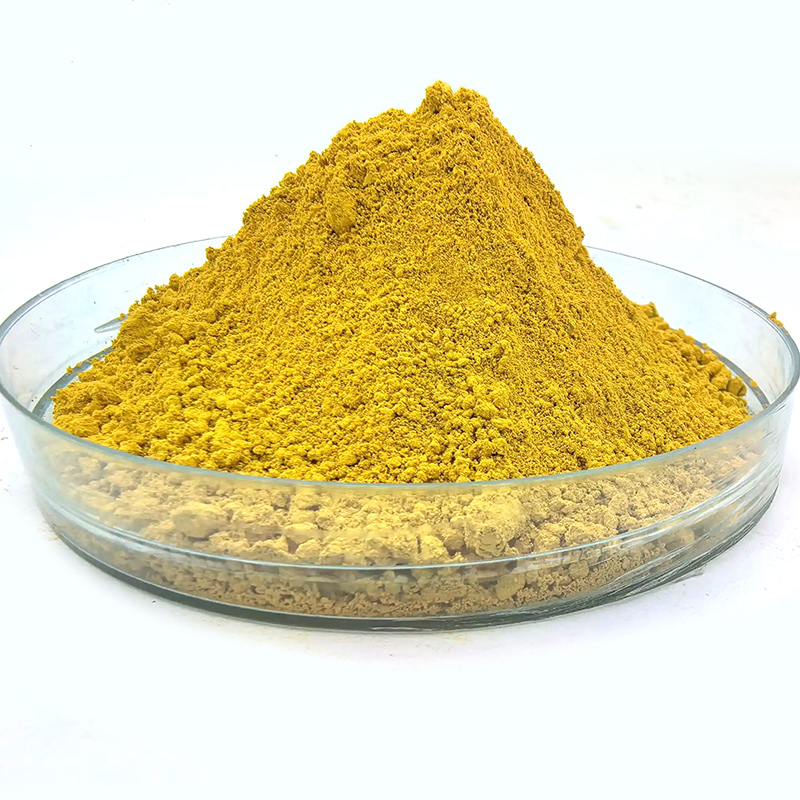
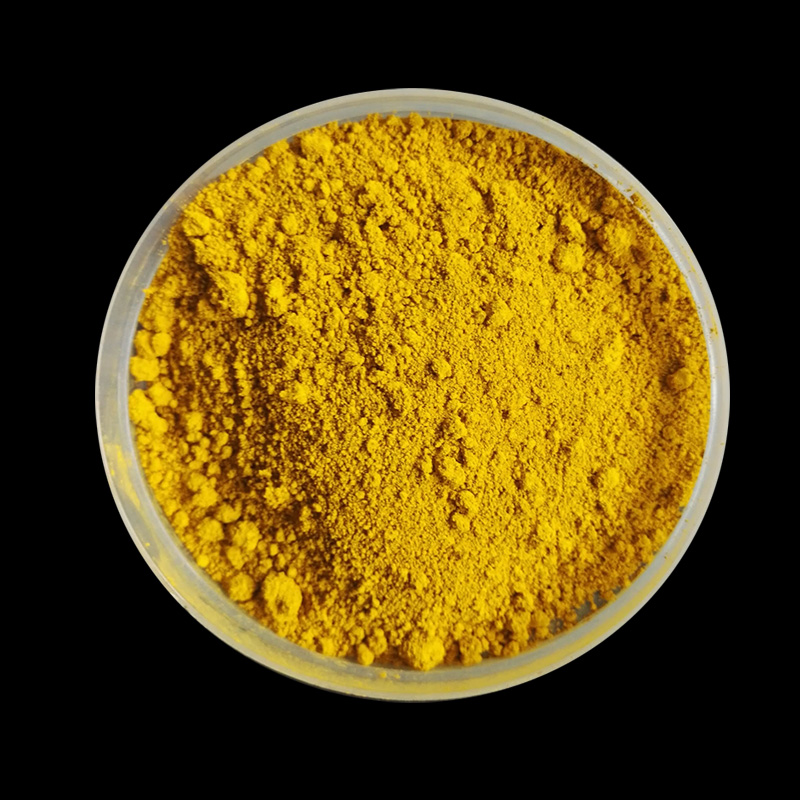
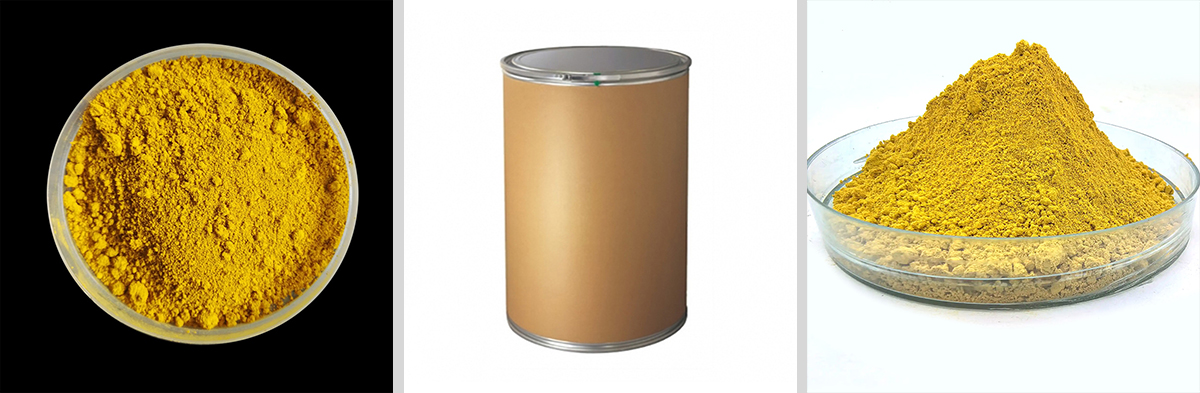
Lead(II) oxide (litharge, CAS 1317-36-8) is an industrial-grade crystalline powder, yellow to orange-yellow in color, with a purity of ≥99% and no odor. It has a melting point of 888℃ and decomposes at a boiling point of 1470℃. The vapor pressure is 0.13 Pa at 20℃, and its relative density is 9.53 at 20℃. Lead monoxide is insoluble in water, soluble in acetic acid and nitric acid, and slightly soluble in alkali. It is chemically stable under normal conditions but incompatible with strong reducing agents and concentrated acids.
Parameters
| Melting point | 886 °C(lit.) |
| Boiling point | 1470 °C |
| bulk density | 3500-3700kg/m3 |
| density | 9.53 |
| vapor pressure | 10 mm Hg ( 0 °C) |
| refractive index | 2.67 |
| storage temp. | Store below +30°C. |
| solubility | Soluble in concentrated alkali, HCl and ammonium chloride. Insoluble in dilute alkali and alcohol. |
| form | powder |
| color | yellow |
| Specific Gravity | 9.53 |
| PH | 8-9 (100g/l, H2O, 20℃)(slurry) |
| Water Solubility | Soluble in concentrated alkali, hydrochloric acid, and ammonium chloride. Insoluble in water, dilute alkali and alcohol. |
| Crystal Structure | Rutile type |
| Hydrolytic Sensitivity | 4: no reaction with water under neutral conditions |
| crystal system | square |
| Merck | 145413 |
| Space group | P42/mnm |
| Lattice constant | a/nmb/nmc/nmα/oβ/oγ/oV/nm30.49550.49550.33839090900.0831 |
| Exposure limits | ACGIH: TWA 0.05 mg/m3 |
| NIOSH: IDLH 100 mg/m3; TWA 0.050 mg/m3 | |
| Stability: | Stable. Reacts violently with hydrogen peroxide, strong oxidizing agents, aluminium, zirconium, halogens, sulphur trioxide, boron, silicon, sodium, zinc. |
| CAS DataBase Reference | 1317-36-8(CAS DataBase Reference) |
| NIST Chemistry Reference | Lead monoxide(1317-36-8) |
| EPA Substance Registry System | Lead monoxide (1317-36-8) |
Safety Information
| Hazard Codes | T,N |
| Risk Statements | 61-20/22-33-50/53-62 |
| Safety Statements | 53-45-60-61 |
| RIDADR | UN 2291 6.1/PG 3 |
| WGK Germany | 3 |
| RTECS | OG1750000 |
| TSCA | Yes |
| HS Code | 2824 10 00 |
| HazardClass | 6.1(b) |
| PackingGroup | III |
| Hazardous Substances Data | 1317-36-8(Hazardous Substances Data) |
| Toxicity | LD50 i.p. in rats: 40 mg Pb/100g (Bradley, Fredrick) |

Product Application of Lead Monoxide CAS#1317-36-8
Lead monoxide is used in ointments and plasters, and in the preparation of lead subacetate solutions. It serves as a glazing agent for pottery, a glass flux for painting on porcelain and glass, and in leaded glass and varnishes. Combined with glycerol, it acts as a metal cement and is employed to produce iridescent effects on brass and bronze. It is also used for coloring sulfur-containing materials such as hair, nails, wool, and horn, as well as in the manufacture of artificial tortoise shell and horn. Additional applications include pigments for rubber, production of boiled linseed oil, and in the assay of gold and silver ores.