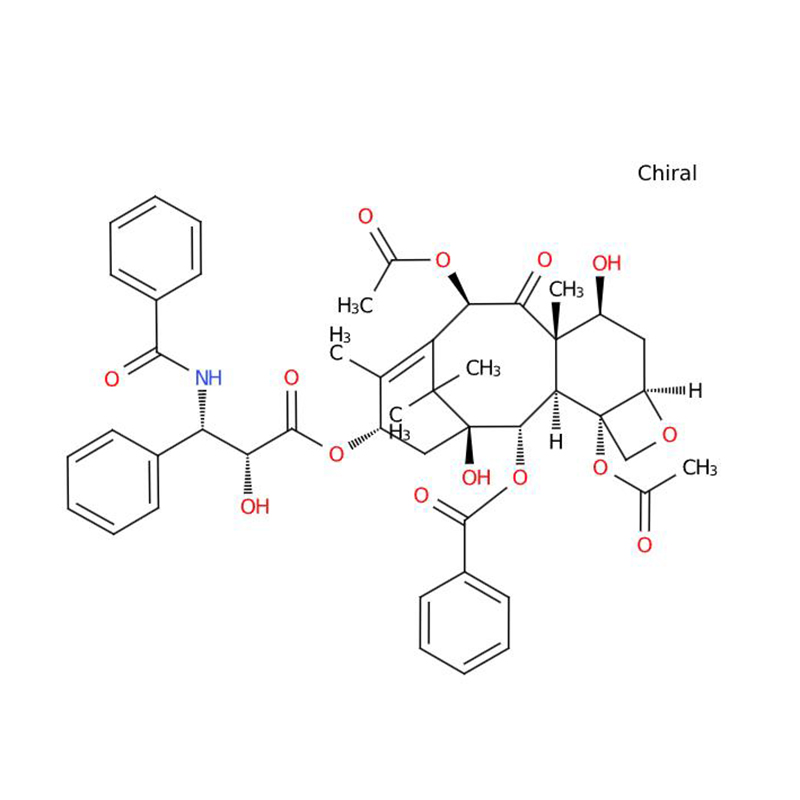


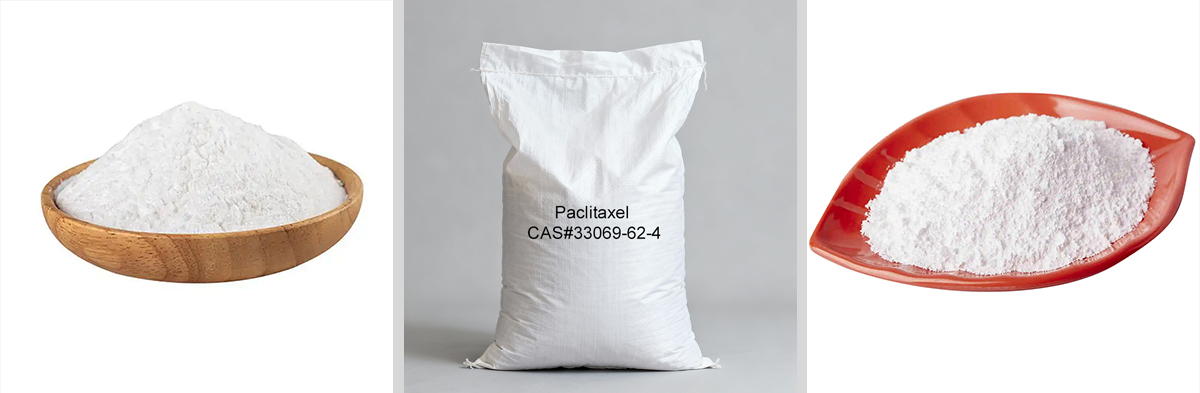
Paclitaxel CAS#33069-62-4
Paclitaxel promotes microtubule polymerization and stabilizes polymerized microtubules, a unique mechanism among known drugs.
It specifically binds to polymerized microtubules without affecting unpolymerized tubulin dimers.
Paclitaxel interferes with cellular functions by causing microtubule accumulation, effectively blocking cell division during mitosis.
Clinically effective for ovarian and breast cancer, with additional therapeutic effects on lung cancer, colorectal cancer, melanoma, head and neck cancer, lymphoma, and brain tumors.
Products Description of Paclitaxel CAS#33069-62-4
Paclitaxel is a monomeric diterpene compound extracted from the bark of plants in the Taxus genus. As a complex secondary metabolite, it is currently the only known drug capable of promoting microtubule polymerization and stabilizing polymerized microtubules. Isotope tracing studies show that paclitaxel binds exclusively to polymerized microtubules and does not interact with unpolymerized tubulin dimers. Upon exposure to paclitaxel, cells accumulate a large number of microtubules, disrupting cellular functions and effectively halting cell division during mitosis. Clinical studies (Phase II–III) indicate that paclitaxel is primarily used for ovarian and breast cancers, while also showing therapeutic effects against lung cancer, colorectal cancer, melanoma, head and neck cancer, lymphoma, and brain tumors.
Parameters
| Melting point | 213 °C (dec.)(lit.) |
| alpha | D20 -49° (methanol) |
| Boiling point | 774.66°C (rough estimate) |
| density | 0.2 |
| refractive index | -49 ° (C=1, MeOH) |
| Fp | 9℃ |
| storage temp. | 2-8°C |
| solubility | methanol: 50 mg/mL, clear, colorless |
| form | powder |
| pka | 11.90±0.20(Predicted) |
| color | white |
| Water Solubility | 0.3mg/L(37 ºC) |
| λmax | 227nm(MeOH)(lit.) |
| Merck | 146982 |
| BRN | 1420457 |
| Stability: | Stable. Incompatible with strong oxidizing agents. Combustible. |
| InChIKey | RCINICONZNJXQF-MZXODVADSA-N |
| LogP | 3.950 (est) |
| CAS DataBase Reference | 33069-62-4(CAS DataBase Reference) |
| EPA Substance Registry System | Paclitaxel (33069-62-4) |
Safety Information
| Hazard Codes | Xn |
| Risk Statements | 37/38-41-42/43-62-68-40-48-20/21/22-68/20/21/22 |
| Safety Statements | 22-26-36/37/39-45 |
| RIDADR | 1544 |
| WGK Germany | 3 |
| RTECS | DA8340700 |
| F | 45951 |
| HazardClass | 6.1(b) |
| PackingGroup | III |
| HS Code | 29329990 |
| Hazardous Substances Data | 33069-62-4(Hazardous Substances Data) |
| Toxicity | LD50 intraperitoneal in mouse: 128mg/kg |

Product Application of Paclitaxel CAS#33069-62-4
Paclitaxel is an anti-tumor drug primarily used to treat metastatic breast cancer and ovarian cancer. It is a broad-spectrum anticancer agent derived from natural sources and is also applied in the treatment of other cancers such as ovarian and breast cancers.
This drug binds to the N-terminal region of β-tubulin, promoting the formation of highly stable microtubules, preventing their depolymerization, and halting normal cell division by arresting cells in the G2/M phase of the cell cycle.
As an anti-microtubule agent, paclitaxel stabilizes tubulin, inhibits mitosis, and effectively acts on human endothelial cells, with an IC50 of 0.1 pM.