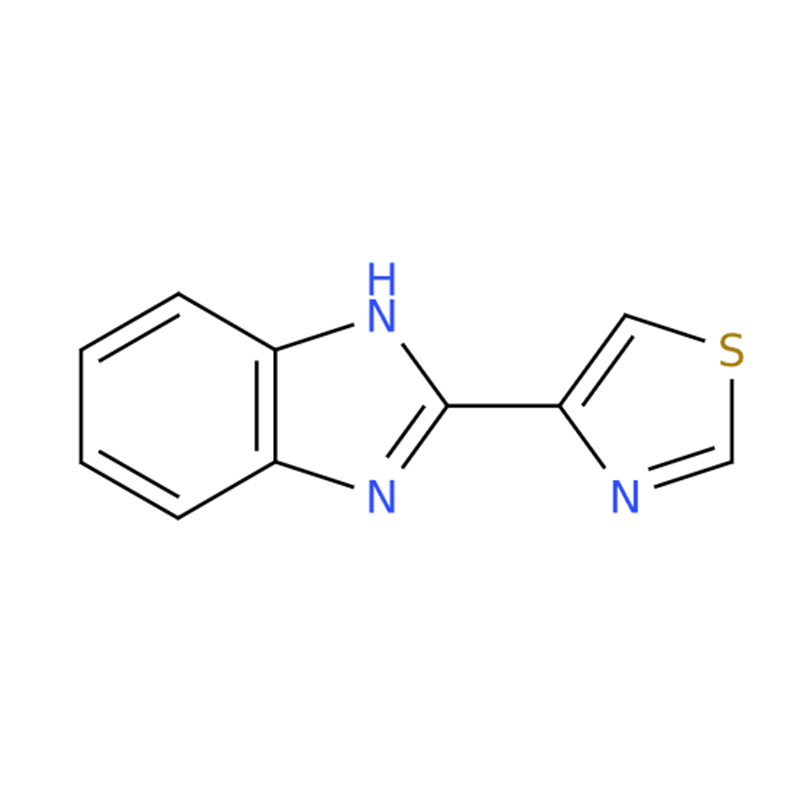

Thiabendazole CAS#148-79-8
Dual-Function Antifungal and Antiparasitic Agent: Thiabendazole exhibits both fungicidal and antiparasitic activities, making it suitable for a broad range of agricultural and veterinary applications.
Effective Control of Fungal Diseases: It is widely used to manage mold, blight, and various other fungal infections affecting fruits and vegetables.
Broad-Spectrum Anthelmintic Activity: The compound is effective against roundworms, hookworms, and other helminth species that can infect humans, livestock, and wildlife.
Unique Biological Activity: Thiabendazole acts by inhibiting key metabolic processes in parasites, including fumarate reductase activity, mitochondrial respiration, and ATP production, contributing to effective parasite control.
Thiabendazole CAS#148-79-8
Thiabendazole is a fungicide and parasiticide. As a fungicide, it is used to treat mold, blight, and various other fungal diseases in fruits and vegetables. As an antiparasitic agent, it is effective against roundworms, hookworms, and other helminth species that may infect wild animals, livestock, and humans.
In addition, Thiabendazole has been reported to inhibit cell angiogenesis. Although its exact mechanism of action is not fully understood, studies suggest that it can suppress the helminth-specific mitochondrial enzyme fumarate reductase, thereby disrupting the citric acid cycle, mitochondrial respiration, and ATP production, ultimately leading to parasite death. It may also interfere with microtubule polymerization processes.
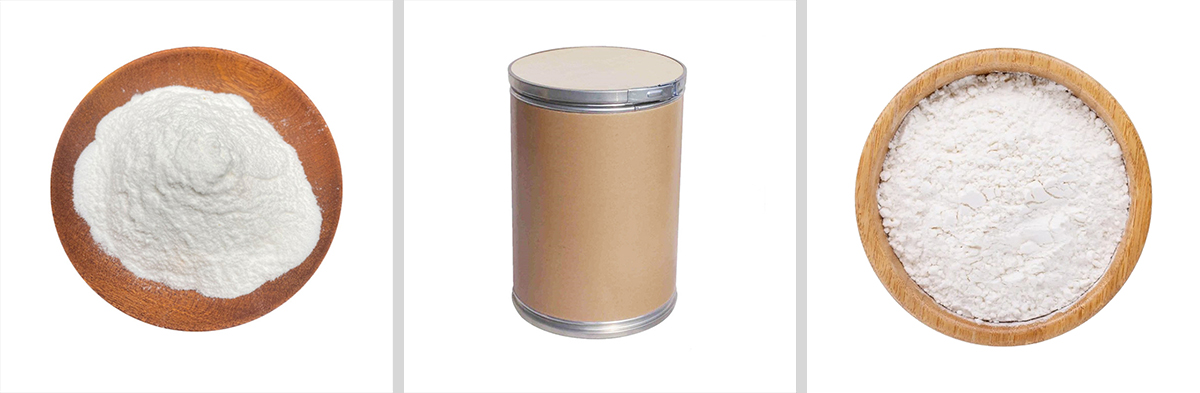
Thiabendazole Chemical Properties
| Melting point | 298-301°C |
| Boiling point | 446.0±37.0 °C(Predicted) |
| density | 1.2271 (rough estimate) |
| vapor pressure | Negligible at room temperature |
| refractive index | 1.5500 (estimate) |
| storage temp. | Sealed in dry,Room Temperature |
| solubility | Soluble in methanol and dimethyl sulfoxide. |
| pka | pKa 4.7 (Uncertain) |
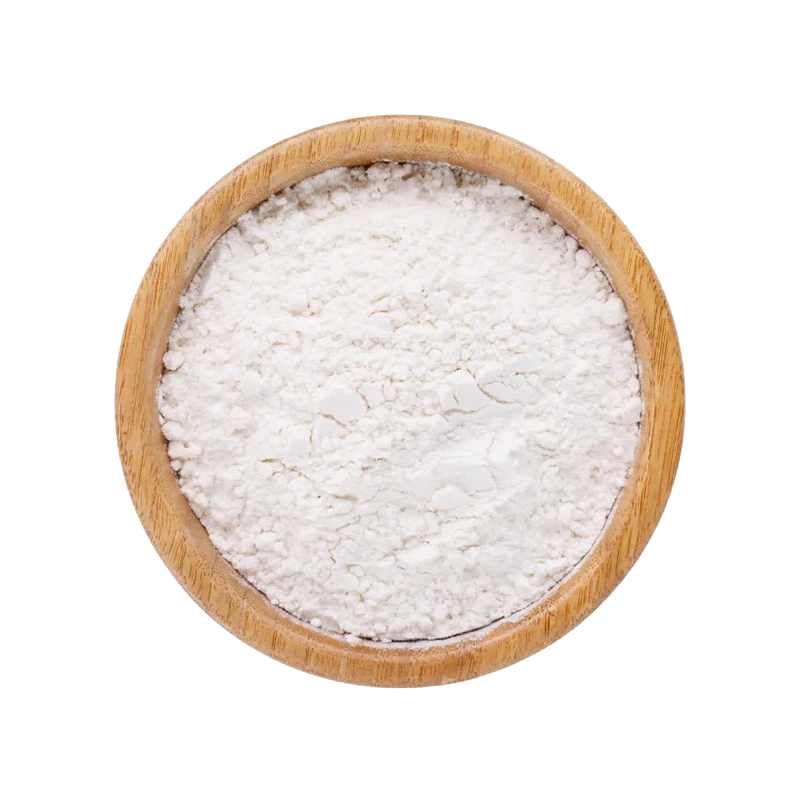
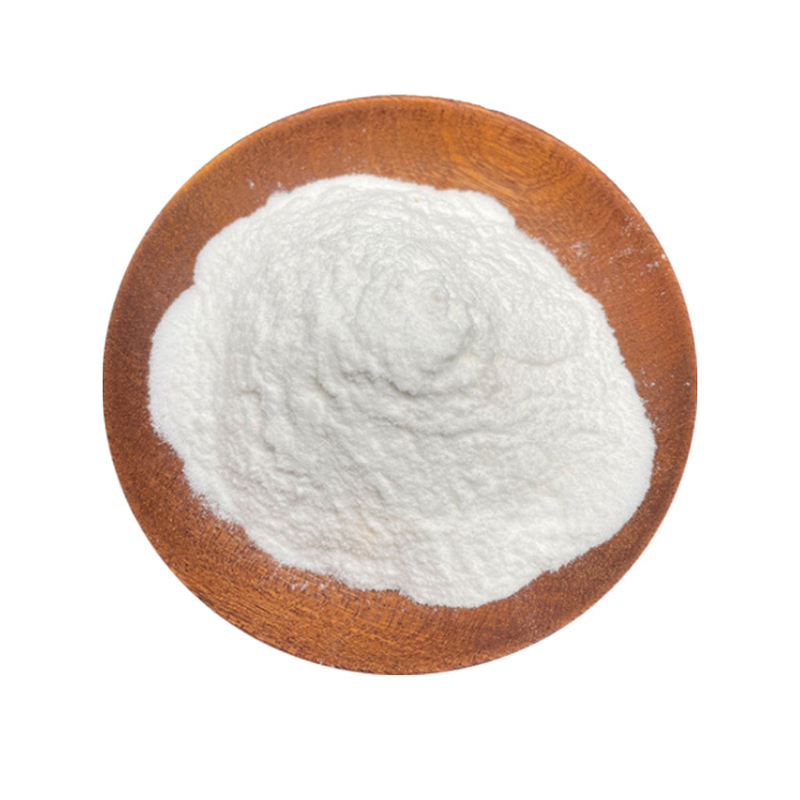
| form | powder |
| color | light yellow |
| Water Solubility | 0.005 g/100 mL |
| Merck | 149289 |
| BRN | 611403 |
| Cosmetics Ingredients Functions | ANTIMICROBIAL |
| InChI | 1S/C10H7N3S/c1-2-4-8-7(3-1)12-10(13-8)9-5-14-6-11-9/h1-6H,(H,12,13) |
| InChIKey | WJCNZQLZVWNLKY-UHFFFAOYSA-N |
| SMILES | c1ccc2[nH]c(nc2c1)-c3cscn3 |
| LogP | 2.47 |
| CAS DataBase Reference | 148-79-8(CAS DataBase Reference) |
| NIST Chemistry Reference | Thiabendazole(148-79-8) |
| EPA Substance Registry System | Thiabendazole (148-79-8) |
Safety Information
| Hazard Codes | N,Xi |
| Risk Statements | 50/53-36/37/38 |
| Safety Statements | 60-61-36-26 |
| RIDADR | UN 3077 9/PG 3 |
| WGK Germany | 2 |
| RTECS | DE0700000 |
| TSCA | TSCA listed |
| HazardClass | 9 |
| PackingGroup | III |
| HS Code | 29341000 |
| Storage Class | 11 - Combustible Solids |
| Hazard Classifications | Aquatic Acute 1 |
| Aquatic Chronic 1 | |
| Hazardous Substances Data | 148-79-8(Hazardous Substances Data) |
| Toxicity | LD50 in mice, rats, rabbits (g/kg): 3.6, 3.1, >3.8 orally (Robinson) |

Product Application of Thiabendazole CAS#148-79-8
Thiabendazole is widely applied as a post-harvest systemic fungicide, particularly for citrus fruits and bananas. It is effective in controlling fruit rots in bananas, citrus, apples, and pears, as well as bulb and corm rots in ornamental plants. It is also used to prevent storage rots in sweet potatoes and potatoes, and to manage Dutch elm disease.
In addition, Thiabendazole serves as the original benzimidazole anthelmintic, used in both human and veterinary health applications.