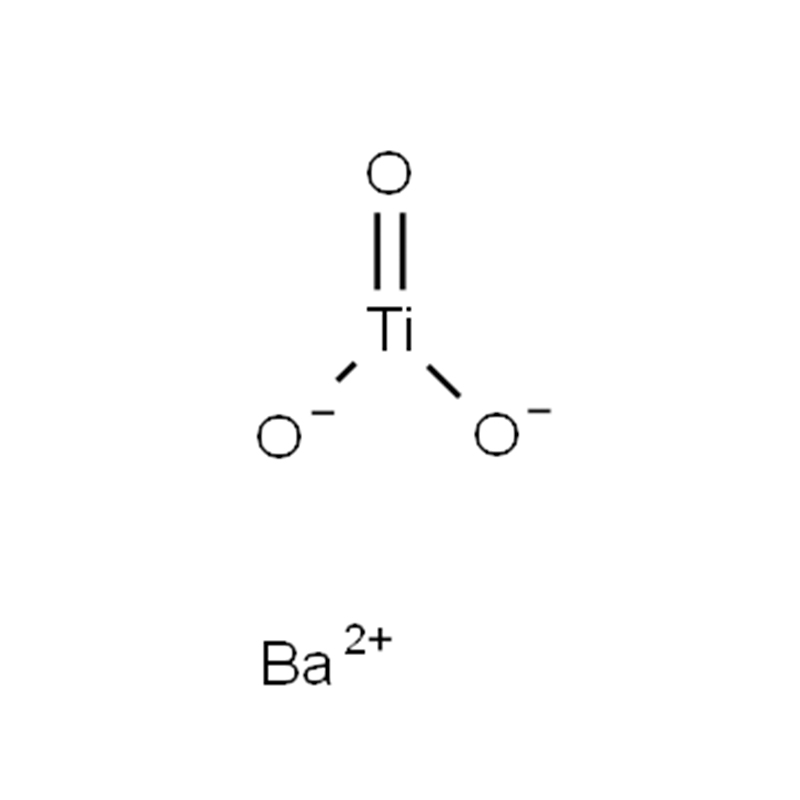

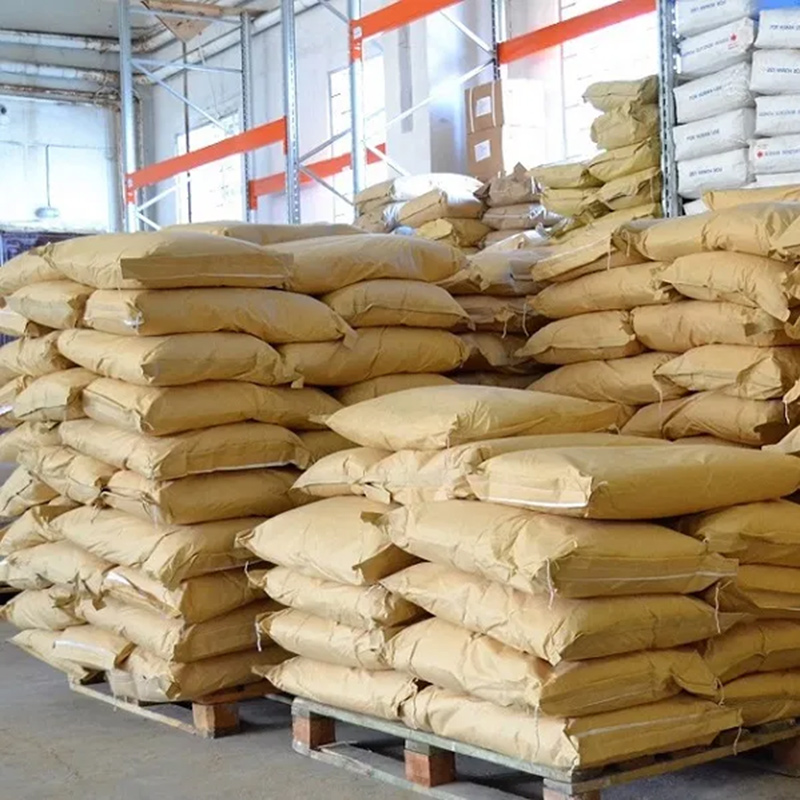
Barium titanate CAS#12047-27-7
Outstanding Electrical Functional Properties: Barium titanate (BaTiO₃) exhibits excellent ferroelectric, piezoelectric, and dielectric properties, making it highly suitable for advanced electronic and functional material applications.
High Insulation and Reliability: With its high insulation resistance, it ensures stable performance and reliability in electronic components, even under demanding operating conditions.
Essential Material for Electronic Ceramics Industry: Featuring a unique ABO₃ perovskite crystal structure, it serves as a key raw material in the production of high-performance electronic ceramics.
Broad Range of High-Tech Applications: It is widely used in multilayer ceramic capacitors (MLCCs), PTC thermistors, optoelectronic devices, and memory components, supporting modern electronics and smart technologies.
Barium titanate CAS#12047-27-7
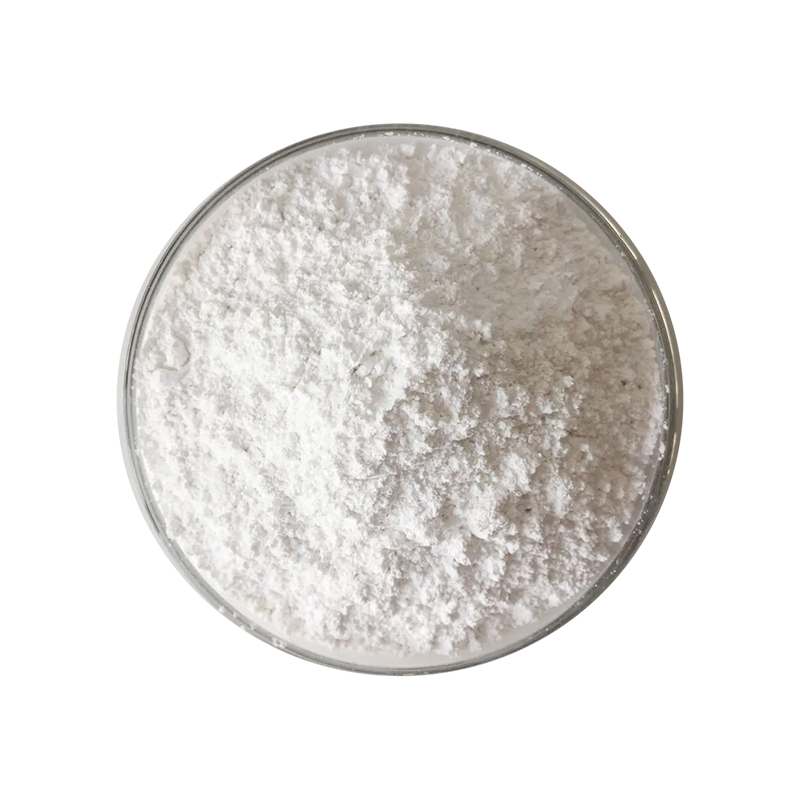
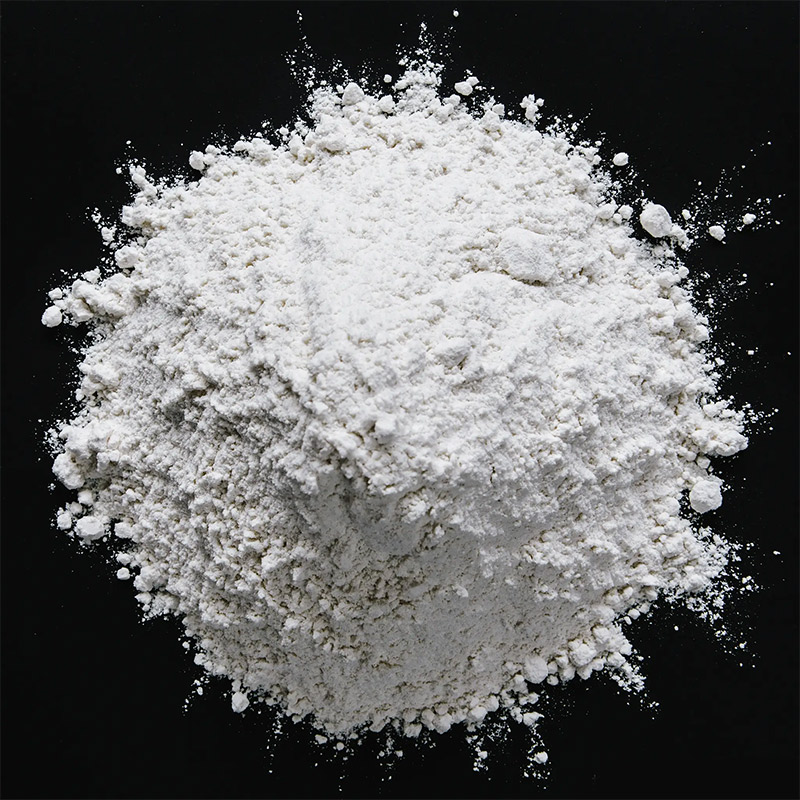
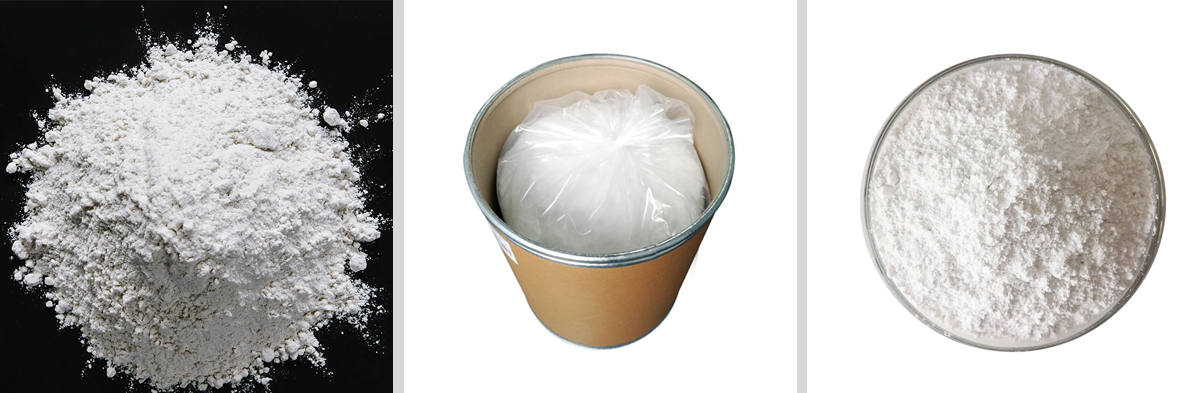
Barium titanate (BaTiO₃) is an inorganic compound that appears as a white powder and becomes transparent when formed into larger crystals. Featuring a typical ABO₃ perovskite structure, it is an important functional ceramic material and a key raw material in the electronic ceramics industry. Due to its excellent ferroelectric, piezoelectric, and dielectric properties, as well as high insulation resistance, it is widely used in multilayer ceramic capacitors (MLCCs), PTC thermistors, optoelectronic devices, and memory components.
Barium titanate Chemical Properties
| Melting point | 1625 °C |
| Bulk density | 1400kg/m3 |
| Density | 6.08 g/mL at 25 °C(lit.) |
| Vapor pressure | 0Pa at 20℃ |
| Storage temp | no restrictions. |
| Solubility | Soluble in alcohols |
| Form | powder |
| Color | White to gray |
| Specific Gravity | 6.08 |
| PH | 9.6 (20g/l, H2O, 25℃)(slurry) |
| Water Solubility | INSOLUBLE |
| Merck | 141000 |
| Crystal system | square |
| Space group | P4mm |
| Lattice constant | a/nmb/nmc/nmα/oβ/oγ/oV/nm30.399450.399450.40335909090 |
| InChIKey | WNKMTAQXMLAYHX-UHFFFAOYSA-N |
| LogP | 1 at 20℃ |
| CAS DataBase Reference | 12047-27-7(CAS DataBase Reference) |
| EPA Substance Registry System | Barium titanium oxide (BaTiO3) (12047-27-7) |
Safety Information
| Hazard Codes | Xn |
| Risk Statements | 20/22 |
| Safety Statements | 28-28A |
| RIDADR | UN 1564 6.1/PG 3 |
| WGK Germany | 1 |
| RTECS | XR1437333 |
| TSCA | TSCA listed |
| HazardClass | 3 |
| PackingGroup | III |
| HS Code | 28419085 |
| Toxicity | rat,LD50,intraperitoneal,3gm/kg (3000mg/kg),GASTROINTESTINAL: OTHER CHANGESBLOOD: HEMORRHAGEKIDNEY, URETER, AND BLADDER: OTHER CHANGES,Industrial Medicine and Surgery. Vol. 31, Pg. 302, 1962. |

Product Application of Barium Titanate CAS#12047-27-7
Barium titanate has a wide range of important commercial applications due to its ferroelectric and piezoelectric properties, as well as its extremely high dielectric constant—approximately 1,000 times greater than that of water. It exists in five crystalline forms, each stable within a specific temperature range. Ceramic materials based on barium titanate are extensively used in dielectric amplifiers, magnetic amplifiers, and capacitors. These components are widely applied in electronic devices such as digital calculators, radios, televisions, ultrasonic equipment, crystal microphones, telephones, sonar systems, and many other technologies.
As one of the most widely used materials in electronic ceramics, barium titanate (BaTiO₃, BT) is particularly valued for its high permittivity, enabling the production of high-performance capacitors through doping. Given its large-scale use in electronic components, reducing its sintering temperature can lead to significant energy savings. For example, in LTCC (Low Temperature Co-fired Ceramics) applications, barium titanate can be sintered at around 1000°C for 24 hours with the addition of a silicate glass system. Additionally, by incorporating boron oxide or lead borate, a sintered body with approximately 90% relative density can be achieved at 900°C over 8 hours.