Ethylene Glycol Diacetate CAS#111-55-7
High Chemical Reactivity : Ethylene Glycol Diacetate can easily undergo hydrolysis and alcoholysis, making it versatile for chemical reactions and organic synthesis.
Stable Liquid Form : It is a clear, colorless (sometimes slightly yellow) liquid with a moderate density, melting point, and boiling point, suitable for handling and storage.
Functional Ester Properties : Possesses typical ester characteristics, allowing it to act as an acetate donor in various chemical processes.
Versatile Industrial Applications : Can be used as a reagent in organic synthesis to produce ethylene glycol, acetic acid, or other derivatives.
Ethylene Glycol Diacetate CAS#111-55-7
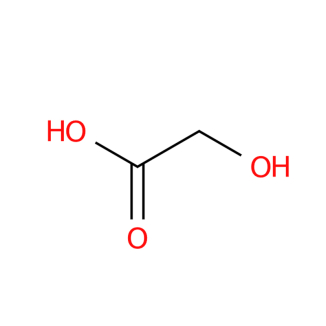
Ethylene Glycol Diacetate, also known as ethylene glycol diacetate, is a compound with an ethylene glycol (1,2-ethanol) backbone, in which each hydroxyl group is esterified with an acetate group (-O-C(=O)-CH₃). It is typically a clear, colorless liquid, occasionally slightly yellow, with an acetate-like odor. Its physical properties include a density of approximately 1.1043 g/mL (20°C), a melting point of -41°C, a boiling range of 185–190°C, a refractive index of 1.4162 (20°C), and an open-cup flash point of 96°C.
The compound exhibits typical ester characteristics and is readily hydrolyzed by strong alkalis or inorganic acids to yield ethylene glycol and acetic acid. For instance, reaction with sodium hydroxide breaks its ester bonds, producing the corresponding alcohol and carboxylate. Additionally, it is reactive in alcoholysis reactions and can serve as an acetate donor in organic synthesis processes.

Ethylene glycol diacetate Chemical Properties
Melting point | -41 °C (lit.) |
Boiling point | 186-187 °C (lit.) |
density | 1.104 g/mL at 20 °C (lit.) |
vapor density | 5.04 (vs air) |
vapor pressure | 0.2 mm Hg ( 20 °C) |
refractive index | n20/D 1.431(lit.) |
Fp | 198 °F |
storage temp. | 2-8°C |
solubility | 160g/l |
form | Liquid |
color | Colorless |
Odor | at 100.00 %. green floral estery alcoholic |
Odor Type | green |
explosive limit | 1.6%, 135°F |
Water Solubility | 160 g/L (20 ºC) |
Merck | 14,3799 |
BRN | 1762308 |
Dielectric constant | 37.7(25℃) |
LogP | 0.1 at 40℃ |
CAS DataBase Reference | 111-55-7(CAS DataBase Reference) |
NIST Chemistry Reference | 1,2-Ethanediol, diacetate(111-55-7) |
EPA Substance Registry System | Ethylene glycol diacetate (111-55-7) |
Safety Information
Hazard Codes | Xn,Xi |
Risk Statements | 36/37/38 |
Safety Statements | 26-36-24/25-22 |
WGK Germany | 1 |
RTECS | KW4025000 |
F | 3 |
Autoignition Temperature | 899 °F |
TSCA | Yes |
HS Code | 29153900 |
Hazardous Substances Data | 111-55-7(Hazardous Substances Data) |
Toxicity | LD50 orally in rats: 6.86 g/kg (Smyth) |

Product Usage
Ethylene Glycol Diacetate (EGDA) can serve as a solvent for oils, cellulose esters, explosives, and similar materials. It provides excellent flow properties in baking varnishes and enamels, particularly where thermoplastic acrylic resins are applied. EGDA is also an effective solvent for cellulosic coatings and can be used in certain ink systems, including screen printing inks. Additionally, it has applications as a fragrance fixative and finds use in waterborne adhesives.
EGDA can act as an acyl donor for in situ generation of peracetic acid in the chemoenzymatic synthesis of caprolactone. It also serves as a precursor in the enzymatic production of poly(ethylene glutarate).