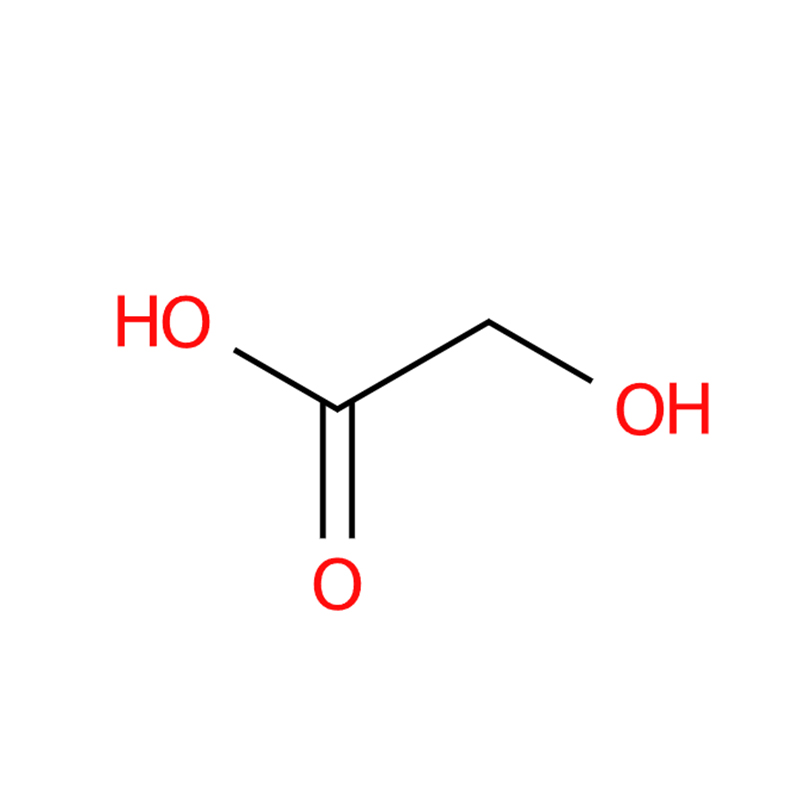
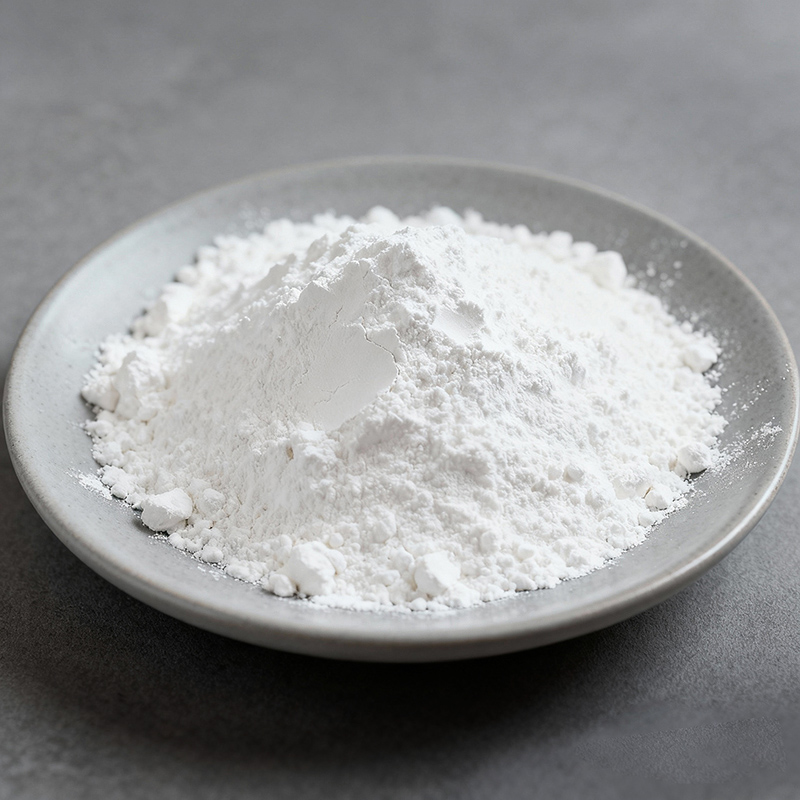
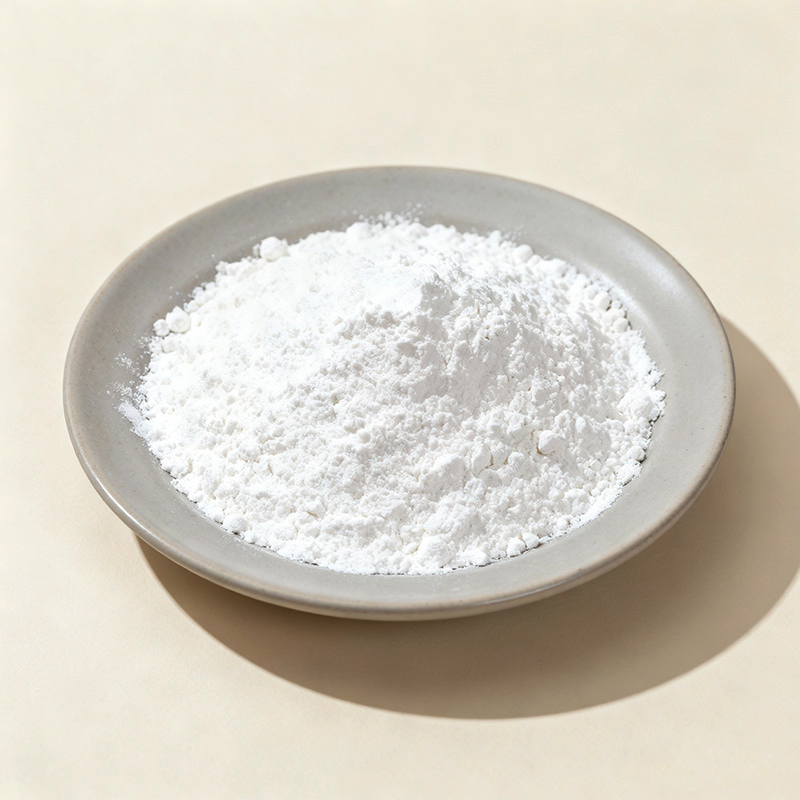
Glycolic acid CAS#79-14-1
Effective Skin Care Performance: Glycolic acid helps improve skin appearance and texture, while reducing wrinkles, acne scars, and hyperpigmentation.
Multifunctional Industrial Applications: It is widely used in textiles as a dyeing and tanning agent, as well as in food processing and pharmaceutical formulations.
Enhances Formulation Properties: When added to emulsion polymers, solvents, and inks, it improves flow characteristics and provides enhanced gloss.
Versatile Chemical Intermediate: Glycolic acid serves as a valuable intermediate in organic synthesis, including redox reactions, esterification, and polymer production.
Product Description of Glycolic Acid CAS#79-14-1
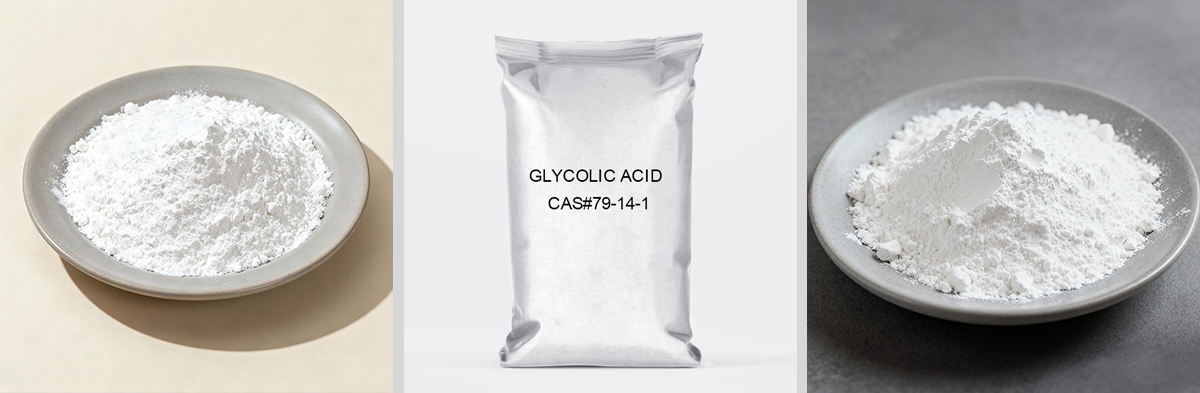
Glycolic acid is the smallest alpha-hydroxy acid (AHA) and is widely used in skincare formulations to enhance skin appearance and texture. It helps reduce wrinkles, acne scars, and hyperpigmentation. In the textile industry, it functions as a dyeing and tanning agent. It is also applied as a flavoring agent in food processing and as a skincare ingredient in pharmaceutical products. Additionally, it can be incorporated into emulsion polymers, solvents, and ink additives to improve flow properties and provide gloss. Furthermore, glycolic acid serves as an important intermediate in organic synthesis, including redox reactions, esterification, and long-chain polymerization processes.
Glycolic acid Chemical Properties
| Melting point | 75-80 °C (lit.) |
| Boiling point | 112 °C |
| bulk density | 600kg/m3 |
| density | 1.25 g/mL at 25 °C |
| vapor pressure | 10.8 hPa (80 °C) |
| refractive index | n20/D 1.424 |
| Fp | 112°C |
| storage temp. | Store below +30°C. |
| solubility | H2O: 0.1 g/mL, clear |
| pka | 3.83(at 25℃) |
| form | Solution |
| color | White to off-white |
| PH | 2 (50g/l, H2O, 20℃) |
| Odor | at 100.00 %. odorless very mild buttery |
| Odor Type | buttery |
| Water Solubility | SOLUBLE |
| Sensitive | Hygroscopic |
| Merck | 144498 |
| BRN | 1209322 |
| Stability: | Stable. Incompatible with bases, oxidizing agents and reducing agents. |
| Cosmetics Ingredients Functions | BUFFERING |
| Cosmetic Ingredient Review (CIR) | Glycolic acid (79-14-1) |
| InChI | 1S/C2H4O3/c3-1-2(4)5/h3H,1H2,(H,4,5) |
| InChIKey | AEMRFAOFKBGASW-UHFFFAOYSA-N |
| SMILES | OCC(O)=O |
| LogP | -1.07 at 20℃ |
| CAS DataBase Reference | 79-14-1(CAS DataBase Reference) |
| NIST Chemistry Reference | Acetic acid, hydroxy-(79-14-1) |
| EPA Substance Registry System | Glycolic acid (79-14-1) |
Safety Information
| Hazard Codes | C |
| Risk Statements | 34-22-20 |
| Safety Statements | 26-36/37/39-45-23 |
| RIDADR | UN 3265 8/PG 3 |
| WGK Germany | 1 |
| RTECS | MC5250000 |
| TSCA | TSCA listed |
| HS Code | 2918 19 98 |
| HazardClass | 8 |
| PackingGroup | II |
| Storage Class | 8A - Combustible corrosive hazardous materials |
| Hazard Classifications | Acute Tox. 4 Inhalation |
| Eye Dam. 1 | |
| Skin Corr. 1B | |
| Hazardous Substances Data | 79-14-1(Hazardous Substances Data) |
| Toxicity | LD50 orally in rats: 1.95 g/kg, H. F. Smyth et al., J. Ind. Hyg. Toxicol. 23, 259 (1941) |

Product Application of Glycolic Acid CAS#79-14-1
Glycolic acid is widely used in the processing of textiles, leather, and metals. It is also applied for pH control and in situations where an economical organic acid is required, such as in the production of adhesives. Additionally, it is used in copper brightening, decontamination cleaning, dyeing, electroplating, pickling, and in the cleaning and chemical milling of metals.