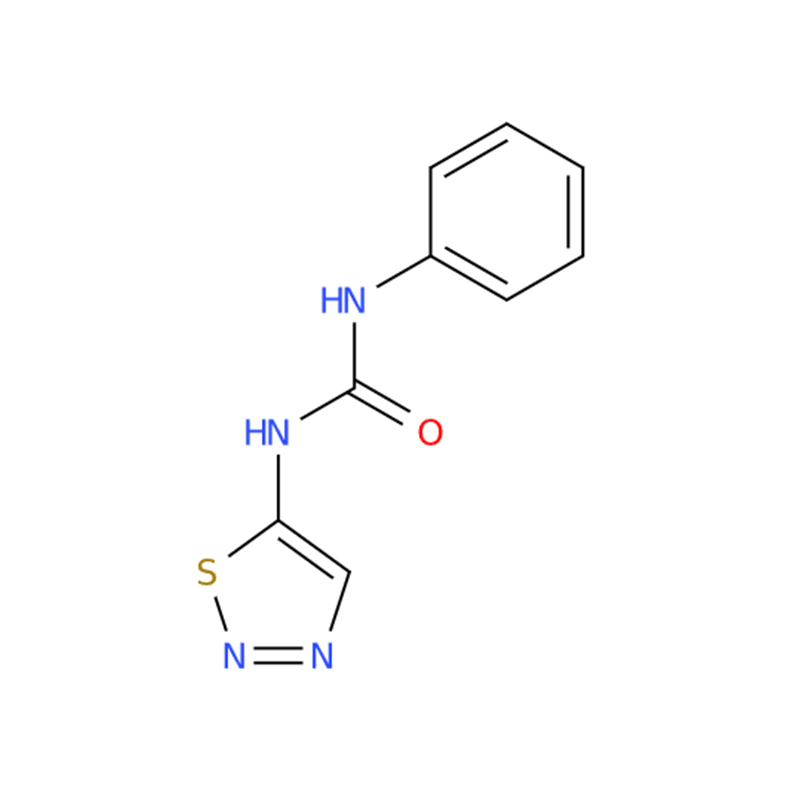
Thidiazuron CAS#51707-55-2
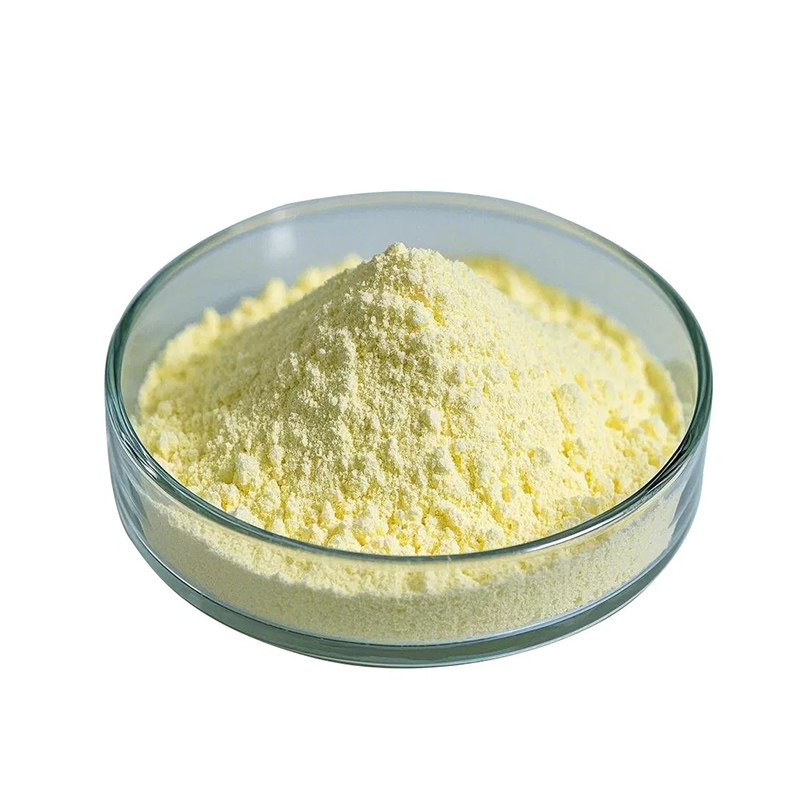
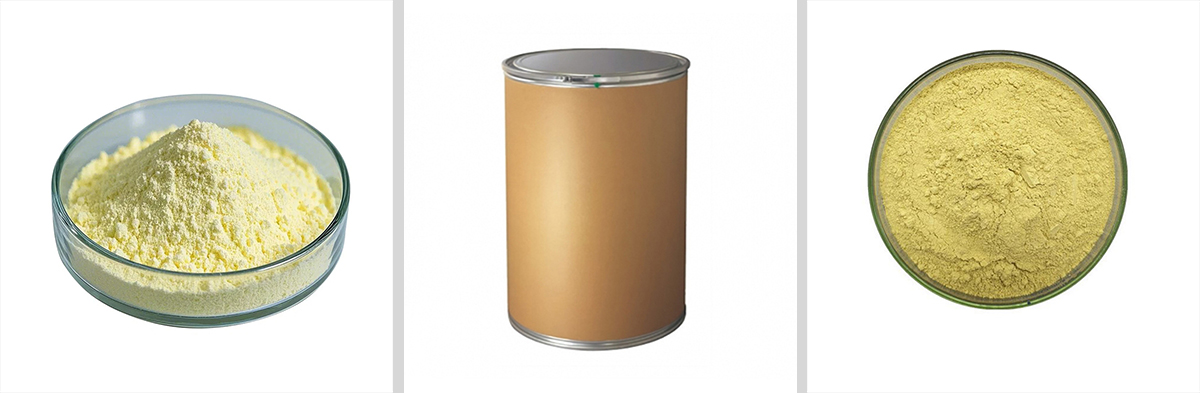
High Purity and Excellent Stability: Available as a pure white, odorless, and tasteless crystalline solid with excellent thermal and chemical stability under normal storage and handling conditions.
Outstanding Solvent Compatibility: Exhibits exceptionally high solubility in polar organic solvents such as dimethyl sulfoxide (DMSO) and dimethylformamide (DMF), facilitating formulation and processing.
Reliable Thermal Performance: Remains stable at temperatures below 200°C, making it suitable for applications requiring good heat resistance and storage stability.
Controlled Environmental Behavior: Demonstrates stability in water at room temperature while maintaining a relatively short degradation period in soil, supporting effective performance and environmental management.
Thidiazuron CAS#51707-55-2
Thidiazuron is supplied as a pure white crystalline solid that is odorless and tasteless. It has a melting point of 210–212.5°C and decomposes at approximately 217°C. The vapor pressure is 4 × 10⁻⁹ Pa at 25°C.
At 25°C, Thidiazuron exhibits excellent solubility in dimethyl sulfoxide (DMSO) and dimethylformamide (DMF), both exceeding 500 g/L. It is also soluble in cyclohexanone (21.5 g/L), acetone (8 g/L), methanol (4.5 g/L), and ethyl acetate (0.8 g/L), while showing very limited solubility in hexane (6 mg/L). The product is insoluble in aliphatic and aromatic hydrocarbons and has a water solubility of 31 mg/L.
The partition coefficient is 59 at pH 7.3. Thidiazuron remains stable at temperatures below 200°C and is stable in water at room temperature, with a half-life exceeding 24 days. In soil, its half-life is less than 60 days.
Thidiazuron Chemical Properties
| Melting point | 213°C |
| density | 1.3493 (rough estimate) |
| refractive index | 1.6390 (estimate) |
| storage temp. | Sealed in dry,2-8°C |
| solubility | Soluble in DMSO |
| pka | 12.06±0.70(Predicted) |
| form | Solid |
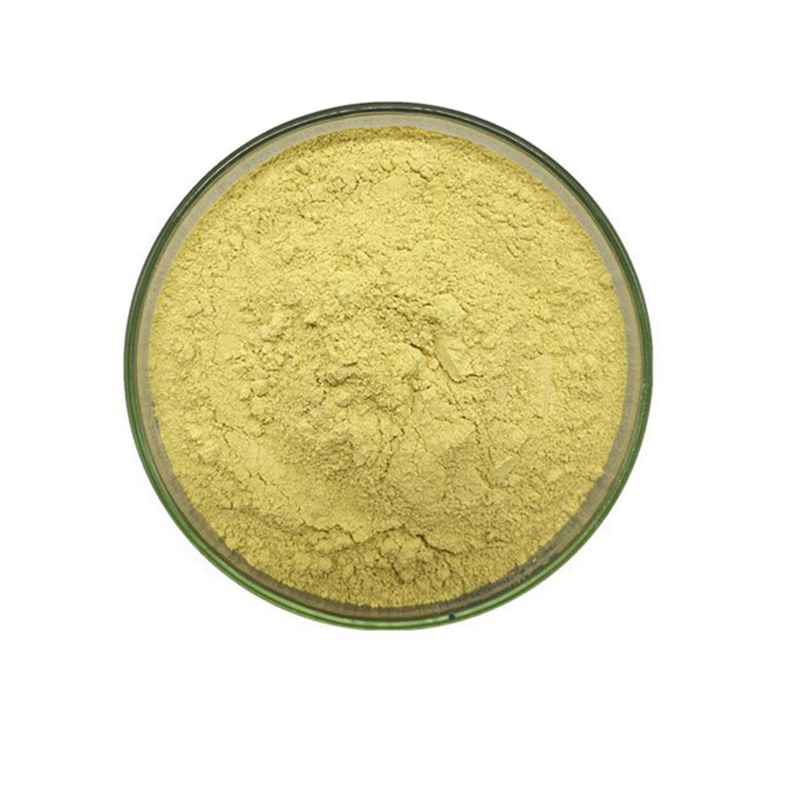
| color | Light yellow to yellow |
| Merck | 139384 |
| BRN | 1078092 |
| Major Application | agriculture |
| InChI | InChI=1S/C9H8N4OS/c14-9(12-8-6-10-13-15-8)11-7-4-2-1-3-5-7/h1-6H,(H2,11,12,14) |
| InChIKey | HFCYZXMHUIHAQI-UHFFFAOYSA-N |
| SMILES | N(C1=CC=CC=C1)C(NC1SN=NC=1)=O |
| CAS DataBase Reference | 51707-55-2(CAS DataBase Reference) |
| EPA Substance Registry System | Thidiazuron (51707-55-2) |
| Hazard Codes | Xi,N |
| Risk Statements | 36/37/38-51/53 |
| Safety Statements | 22-26-36-61 |
| RIDADR | UN 3077 9 / PGIII |
| WGK Germany | 3 |
| RTECS | YU1395000 |
| HS Code | 2934999090 |
| Storage Class | 11 - Combustible Solids |
| Hazard Classifications | Aquatic Acute 1 |
| Aquatic Chronic 1 | |
| Eye Irrit. 2 | |
| Skin Irrit. 2 | |
| STOT SE 3 | |
| Hazardous Substances Data | 51707-55-2(Hazardous Substances Data) |
| Toxicity | LC50 (96-hour) for bluegill sun?sh, channel cat?sh and rainbow trout >1,000 mg/L (Hartley and Kidd, 1987); acute oral LD50 for rats >5,000 mg/kg (Hartley and Kidd, 1987), 5,350 mg/kg (RTECS, 1985). |

Product Application of Thidiazuron CAS#51707-55-2
Thidiazuron is a herbicide, defoliant, and plant growth regulator primarily used as a cotton defoliant to promote leaf drop before harvest, thereby improving harvesting efficiency and increasing crop yield. It is not intended for use on food crops.
Thidiazuron is registered for use in the United States but is not approved for use in European Union countries.
The U.S. Environmental Protection Agency (EPA) has established maximum residue limits for Thidiazuron and its aniline-containing metabolites in various agricultural commodities, including cotton products, livestock tissues, and milk. These tolerance levels help ensure compliance with regulatory requirements and food safety standards.