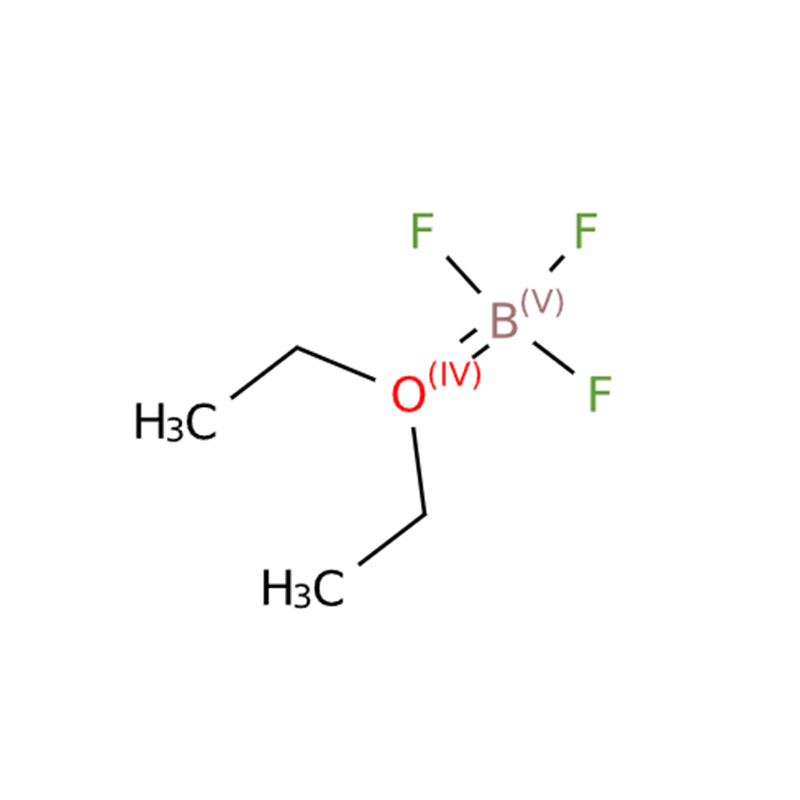
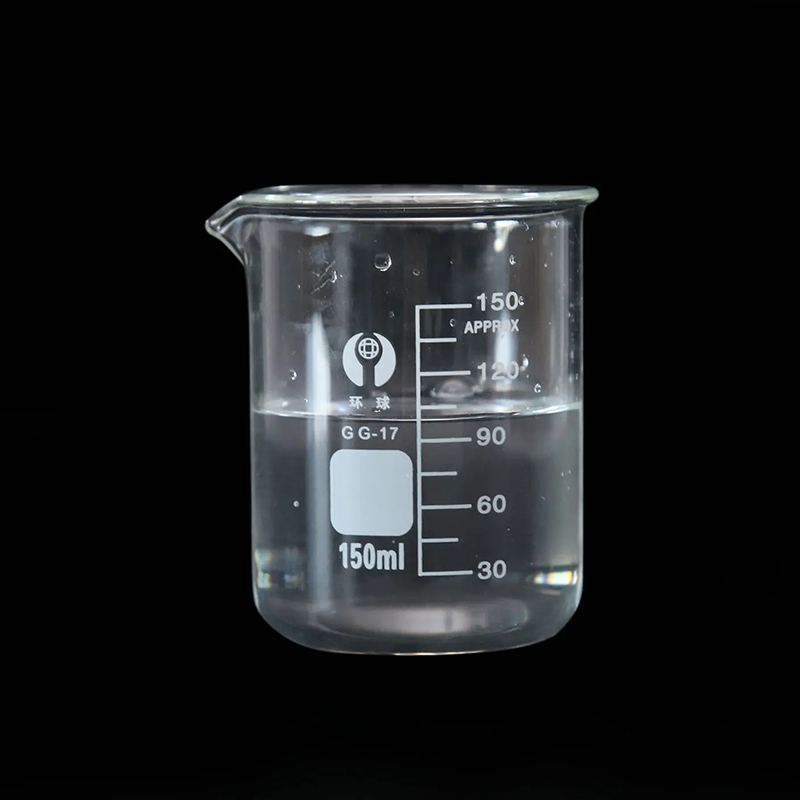
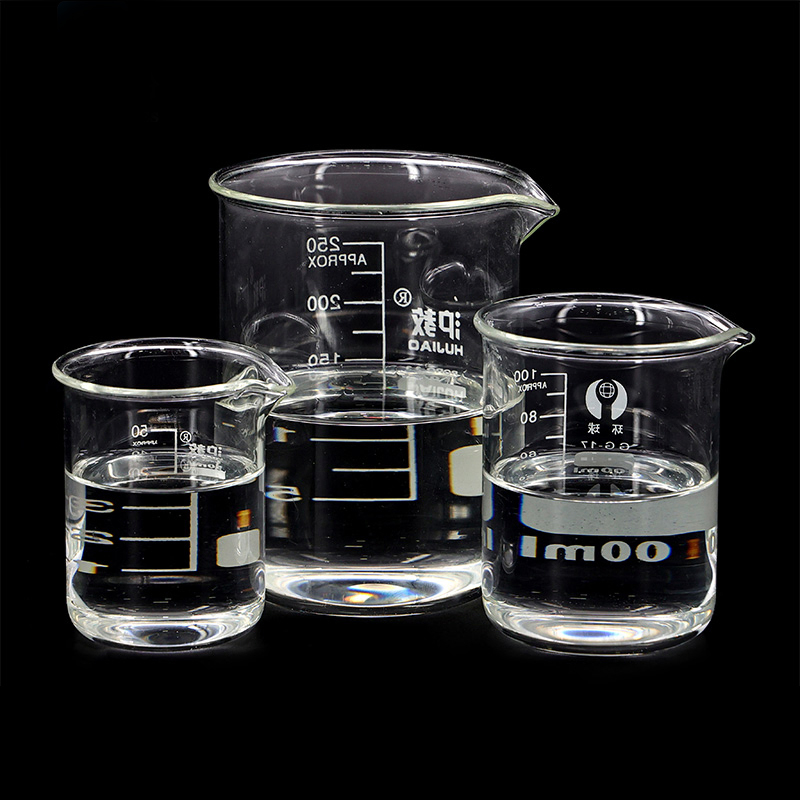

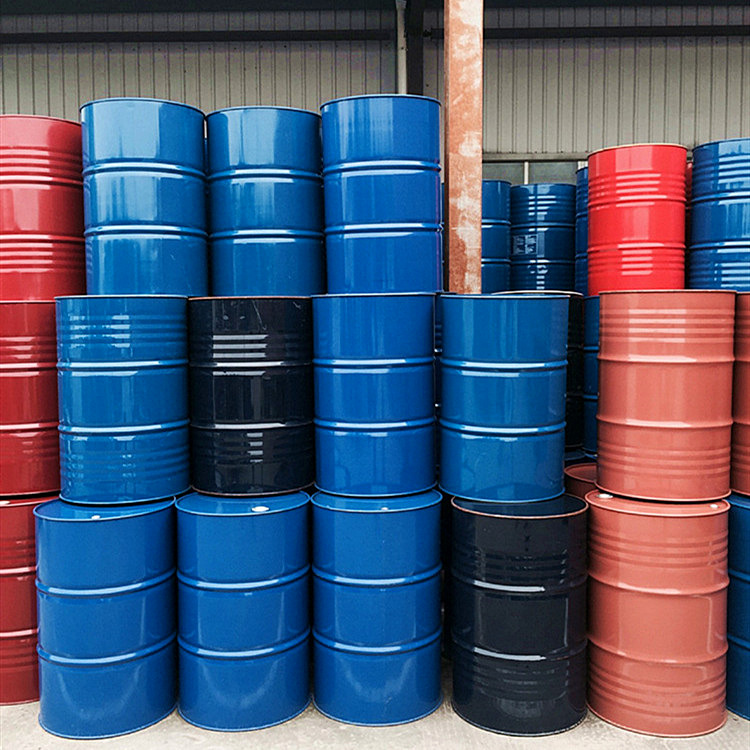
Boron trifluoride diethyl etherate CAS#109-63-7
Highly Efficient Catalyst: Boron trifluoride etherate is widely used as an effective catalyst in various chemical reactions.
Strong Reactivity: Its high reactivity enhances reaction rates and improves process efficiency.
Suitable for Specialized Chemical Processes: It is valuable in applications requiring strong catalytic performance in organic synthesis.
Liquid Form for Easy Handling in Reactions: As a fuming liquid, it allows convenient dosing and integration into liquid-phase reaction systems.
Product Description of Boron Trifluoride Diethyl Etherate CAS#109-63-7
Boron trifluoride diethyl etherate is a fuming liquid commonly used as a catalyst in chemical reactions. It is corrosive to the skin, eyes, and mucous membranes and may be toxic if inhaled. When exposed to water, it can release flammable and corrosive vapors. Proper handling and safety precautions are required during use.
Boron trifluoride diethyl etherate Chemical Properties
| Melting point | −58 °C(lit.) |
| Boiling point | 126-129 °C(lit.) |
| density | 1.15 g/mL(lit.) |
| vapor density | 4.9 (vs air) |
| vapor pressure | 4.2 mm Hg ( 20 °C) |
| refractive index | n20/D 1.344(lit.) |
| Fp | 118 °F |
| storage temp. | Store below +30°C. |
| solubility | Miscible with ether and alcohol. |
| form | liquid |
| color | brown |
| Specific Gravity | 1.126 (20/4℃) |
| explosive limit | 5.1-18.2%(V) |
| Water Solubility | Reacts |
| Hydrolytic Sensitivity | 7: reacts slowly with moisture/water |
| Sensitive | Moisture Sensitive |
| Merck | 141350 |
| BRN | 3909607 |
| Exposure limits | ACGIH: TWA 0.1 ppm; Ceiling 0.7 ppm |
| Stability: | Stable. Highly flammable. May form explosive peroxides in contact with air or oxygen. Reacts exothermically with water to form extremely flammable diethyl ether and toxic, corrosive boron trifluoride hydrates. Also incompatible with bases, amines, alkali metals. |
| InChI | 1S/C4H10O.BF3/c1-3-5-4-2;2-1(3)4/h3-4H2,1-2H3; |
| InChIKey | MZTVMRUDEFSYGQ-UHFFFAOYSA-N |
| SMILES | B(F)(F)F.O(CC)CC |
| CAS DataBase Reference | 109-63-7(CAS DataBase Reference) |
| NIST Chemistry Reference | Boron trifluoride etherate(109-63-7) |
| EPA Substance Registry System | Boron, trifluoro[1,1'-oxybis[ethane]]-, (T-4)- (109-63-7) |
Safety Information
| Hazard Codes | T,C |
| Risk Statements | 10-14-20/22-35-48/23-34-14/15-23-22 |
| Safety Statements | 16-23-26-36/37/39-45-8-28A-43 |
| RIDADR | UN 2604 8/PG 1 |
| WGK Germany | 3 |
| F | 10 |
| Autoignition Temperature | 185 °C DIN 51794 |
| TSCA | TSCA listed |
| HazardClass | 8 |
| PackingGroup | I |
| HS Code | 29319090 |
| Storage Class | 3 - Flammable liquids |
| Hazard Classifications | Acute Tox. 4 Inhalation |
| Acute Tox. 4 Oral | |
| Eye Dam. 1 | |
| Flam. Liq. 3 | |
| Skin Corr. 1B | |
| STOT RE 1 Inhalation | |
| Hazardous Substances Data | 109-63-7(Hazardous Substances Data) |

Product Application of Boron Trifluoride Diethyl Etherate CAS#109-63-7
Boron trifluoride diethyl etherate is widely used as a Lewis acid catalyst in various organic reactions, including Mukaiyama aldol additions, alkylation, acetylation, isomerization, dehydration, and condensation processes. It also plays a key role in polymerization reactions, particularly in the preparation of polyethers and polyol chains.
In addition, it is applied as a catalyst in the synthesis of compounds such as cyclopentyl- and cycloheptyl[b]indoles and other related boron-containing materials. The compound is also utilized in specialized applications, including sensitive neutron detectors in ionization chambers for monitoring radiation levels in the atmosphere. Furthermore, it serves as a reagent for coupling reactions, such as the reaction of imines with allylstannanes and the addition of 4′-nitrobenzenesulfenanilide to alkenes and alkynes.