Propylene oxide CAS#75-56-9
Excellent Solvent Compatibility: Miscible with most common organic reagents and solvents, providing outstanding versatility for chemical synthesis and industrial processing applications.
Good Water Solubility: Exhibits significant solubility in water and can form azeotropic mixtures, making it suitable for a variety of reaction systems and separation processes.
High Reactivity for Chemical Manufacturing: As an important epoxide compound, propylene oxide serves as a valuable intermediate in the production of numerous industrial and specialty chemicals.
Favorable Physical Properties: A colorless, volatile liquid with a low boiling point and good processing characteristics, enabling efficient handling and use in large-scale manufacturing operations.
Product Description of Propylene Oxide CAS#75-56-9
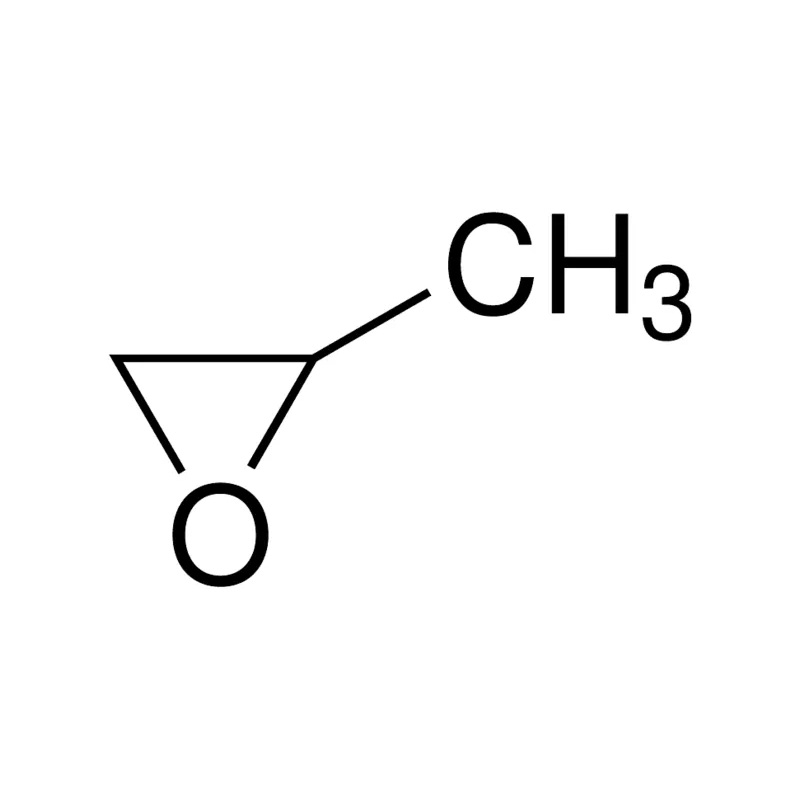
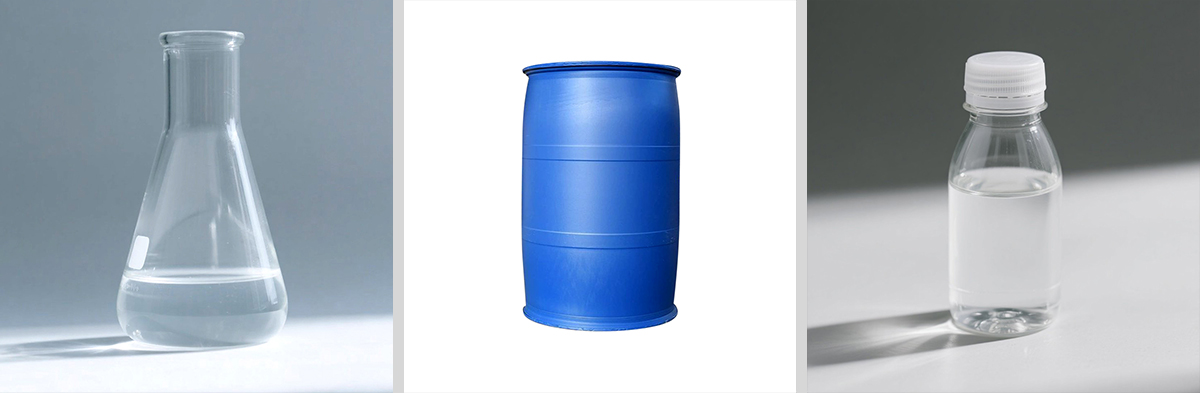
Propylene oxide, also known as 1,2-propylene oxide, methyl ethylene oxide, or commonly abbreviated as P.O., is a colorless, flammable, and highly volatile liquid with an ether-like odor.
It has a molecular weight of 58.08 and a relative density of 0.823 (25°C). The melting point is -112.13°C, while the boiling point is 34.23°C. Its refractive index is 1.3664, flash point is -35°C (closed cup), and ignition temperature is 420°C.
The vapor pressure varies with temperature: 1.04×10⁴ Pa at -20°C, 2.80×10⁴ Pa at 0°C, 6.53×10⁴ Pa at 20°C, and 7.59×10⁴ Pa at 25°C. Propylene oxide is moderately soluble in water (40.5 at 20°C, 60 at 30°C) and is miscible with most common organic reagents.
It can form a binary azeotrope with water (1%) with an azeotropic point of 39.9°C, and also forms azeotropic mixtures with solvents such as dichloromethane, ether, cyclohexane, cyclopentane, and pentene.
Parameters
| Melting point | -112 °C |
| Boiling point | 34 °C(lit.) |
| density | 0.83 g/mL at 25 °C(lit.) |
| vapor density | 2 (vs air) |
| vapor pressure | 29.43 psi ( 55 °C) |
| refractive index | n20/D 1.366(lit.) |
| Fp | −35 °F |
| storage temp. | 2-8°C |
| solubility | 425-450g/l |
| form | Liquid |
| color | Clear |
| Odor | Ethereal; characteristic; sweet, alcoholyc; like natural gas. |
| explosive limit | 1.9-36%(V) |
| Water Solubility | 40 g/100 mL (20 ºC) |
| FreezingPoint | -112.13℃ |
| Merck | 147856 |
| BRN | 79763 |
| Henry's Law Constant | Not an environmentally important parameter because propylene oxide reacts rapidly with water |
| Exposure limits | TLV-TWA 50 mg/m3 (20 ppm) (ACGIH), 240 mg/m3 (100 ppm) (OSHA); IDLH 2000 ppm. |
| Stability: | Stable. Incompatible with acids, bases, oxidizing agents, copper, copper alloys, brass, bronze, iron, metal chlorides, peroxides and a wide variety of other materials. Reacts with compounds containing labile hydrogen. Extremely flammable - note low boiling point, low flash point and very wide explosion limits. Moisture sensitive. |
| LogP | 0.03 |
| CAS DataBase Reference | 75-56-9(CAS DataBase Reference) |
| NIST Chemistry Reference | Propylene oxide(75-56-9) |
| IARC | 2B (Vol. Sup 7, 60) 1994 |
| EPA Substance Registry System | Propylene oxide (75-56-9) |
Safety Information
| Hazard Codes | F+,T |
| Risk Statements | 45-46-12-20/21/22-36/37/38 |
| Safety Statements | 53-45 |
| RIDADR | UN 1280 3/PG 1 |
| WGK Germany | 3 |
| RTECS | TZ2975000 |
| Autoignition Temperature | 430 °C |
| TSCA | Yes |
| HS Code | 2910 20 00 |
| HazardClass | 3 |
| PackingGroup | I |
| Hazardous Substances Data | 75-56-9(Hazardous Substances Data) |
| Toxicity | LD50 orally in rats: 1.14 g/kg (Smyth) |
| IDLA | 400 ppm |

Product Application of Propylene Oxide CAS#75-56-9
Propylene oxide is an important petrochemical raw material widely used in industrial chemical production. It serves as a key intermediate in the manufacture of polyether polyols, propylene glycol, surfactants, foaming agents, demulsifiers, and mineral processing reagents.