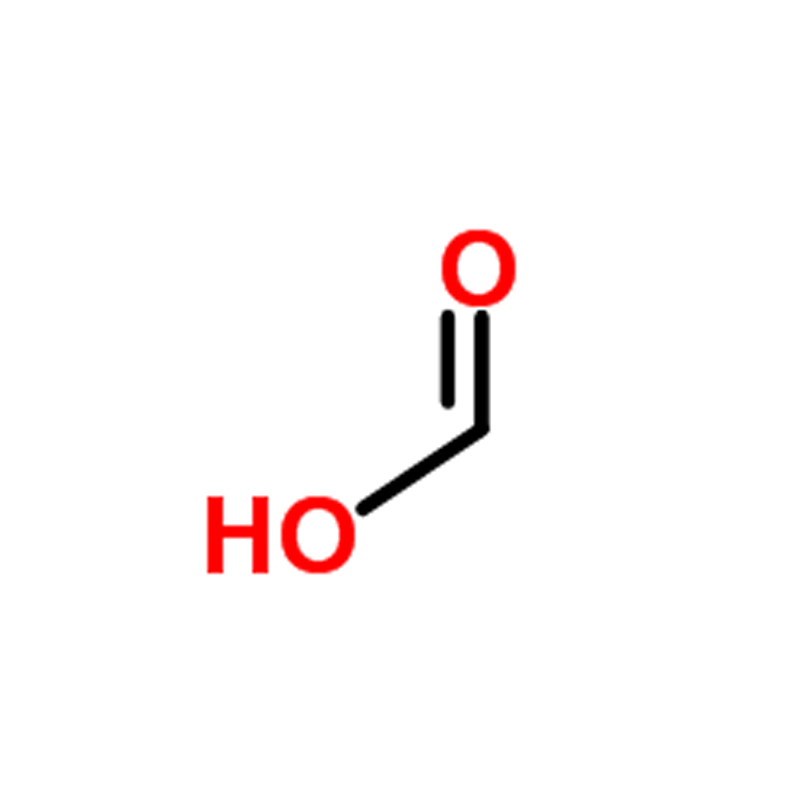
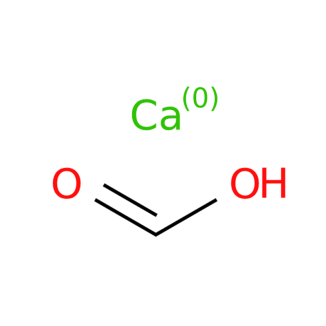
Products Description of Formic Acid CAS#64-18-6
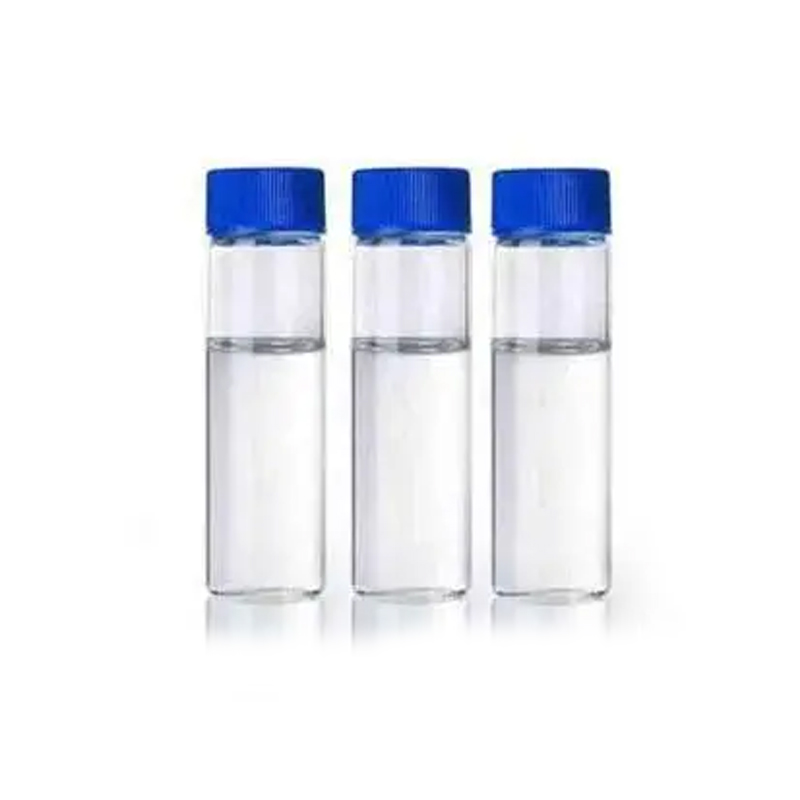
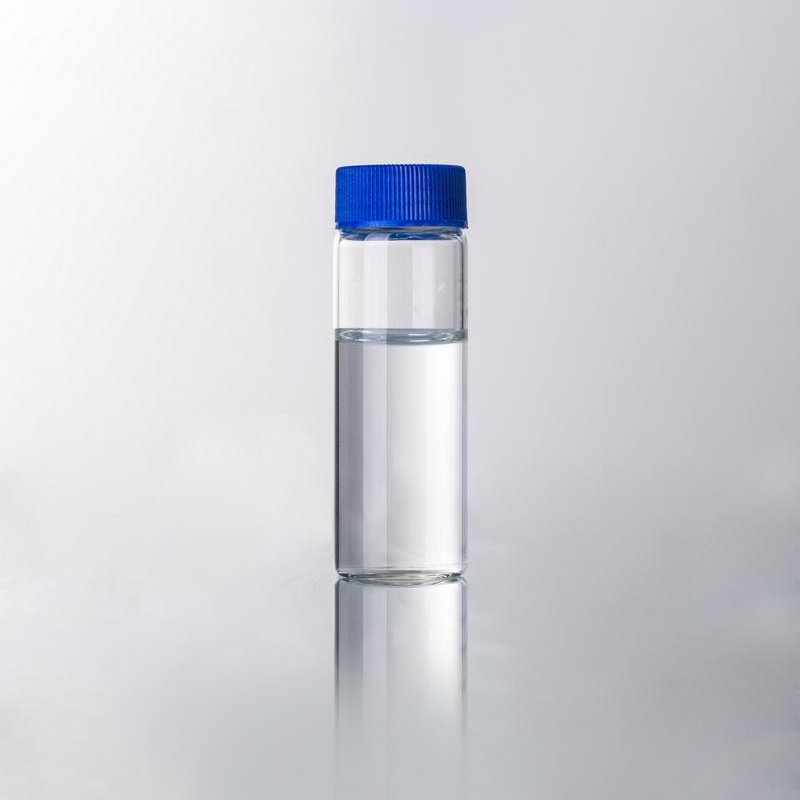
Formic acid is a colorless liquid characterized by a strong, pungent odor. It is a stable yet highly corrosive and flammable chemical with hygroscopic properties, readily absorbing moisture from the air.
This substance is incompatible with sulfuric acid, strong alkalis, furfuryl alcohol, hydrogen peroxide, powerful oxidizing agents, and bases. Contact with oxidizers may cause violent reactions, so careful handling and proper storage are essential to ensure safety.

Parameters
| Melting point | 8.2-8.4 °C (lit.) |
| Boiling point | 100-101 °C (lit.) |
| density | 1.22 g/mL at 25 °C (lit.) |
| vapor density | 1.03 (vs air) |
| vapor pressure | 52 mm Hg ( 37 °C) |
| refractive index | n20/D 1.377 |
| FEMA | 2487 | FORMIC ACID |
| Fp | 133 °F |
| storage temp. | 2-8°C |
| solubility | H2O: soluble1g/10 mL, clear, colorless |
| pka | 3.75(at 20℃) |
| form | Liquid |
| Specific Gravity | 1.216 (20℃/20℃) |
| color | APHA: ≤15 |
| PH | 3.47(1 mM solution);2.91(10 mM solution);2.38(100 mM solution) |
| ; |
| Odor | at 0.10 % in water. pungent vinegar formyl |
| Odor Type | acetic |
| biological source | synthetic |
| explosive limit | 12-38%(V) |
| Water Solubility | MISCIBLE |
| Sensitive | Hygroscopic |
| λmax | λ: 260 nm Amax: 0.03 |
| λ: 280 nm Amax: 0.01 |
| Merck | 144,241 |
| JECFA Numbr | 79 |
| BRN | 1209246 |
| Henry's Law | At 25 °C: 95.2, 75.1, 39.3, 10.7, and 3.17 at pH values of 1.35, 3.09, 4.05, 4.99, and 6.21, respectively (Hakuta et al., 1977) |
| Constant |
| Dielectric constant | 58.0(16℃) |
| Exposure limits | TLV-TWA 5 ppm (~9 mg/m3) (ACGIH, MSHA, OSHA, and NIOSH); IDLH 100 ppm (180 mg/m3) (NIOSH). |
| Stability: | Stable. Substances to be avoided include strong bases, strong oxidizing agents and powdered metals, furfuryl alcohol. Combustible. Hygroscopic. Pressure may build up in tightly closed bottles, so bottles should be opened carefully and vented periodically. |
| InChIKey | BDAGIHXWWSANSR-UHFFFAOYSA-N |
| LogP | -0.54 |
| CAS DataBase Reference | 64-18-6(CAS DataBase Reference) |
| NIST Chemistry Reference | Formic acid(64-18-6) |
| EPA Substance Registry Systm | Formic acid (64-18-6) |
Safety Information
| Hazard Codes | T,C,Xi |
| Risk Statements | 23/24/25-34-40-43-35-36/38-10 |
| Safety Statements | 36/37-45-26-23-36/37/39 |
| RIDADR | UN 1198 3/PG 3 |
| OEB | B |
| OEL | TWA: 5 ppm (9 mg/m3) |
| WGK Germany | 2 |
| RTECS | LP8925000 |
| F | 10 |
| Autoignition Temperature | 1004 °F |
| TSCA | Yes |
| HazardClass | 8 |
| PackingGroup | II |
| HS Code | 29151100 |
| Hazardous Substances Data | 64-18-6(Hazardous Substances Data) |
| Toxicity | LD50 in mice (mg/kg): 1100 orally; 145 i.v. (Malorny) |
| IDLA | 30 ppm |

Product Application of Formic Acid (CAS No. 64-18-6)
Formic Acid is widely used across numerous industrial and commercial fields. It serves as an important organic acid and chemical intermediate in the synthesis of various organic compounds. In the feed and food industries, it is applied as a feed additive, food additive, and flavoring component, including both natural-equivalent and artificial flavors.
Formic Acid is also utilized in paper processing as a functional paper chemical, and as a high-purity solvent in laboratory and industrial operations. In analytical chemistry, it is commonly employed as an analytical standard and as a reference substance for impurity testing, as well as a gas chromatography standard for color scale calibration. In addition, it functions as a key organic raw material in many manufacturing processes.
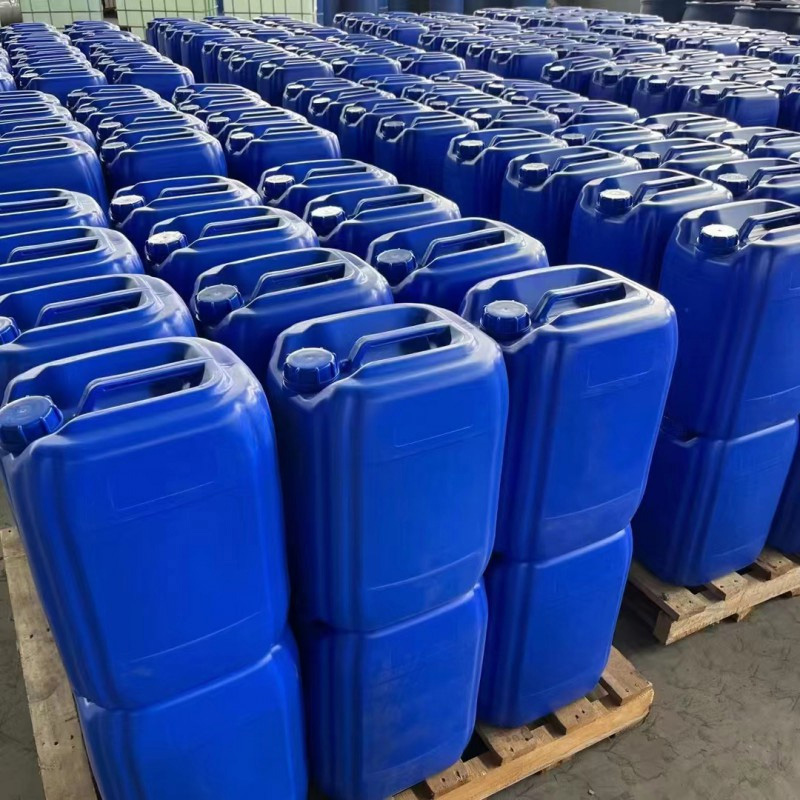
Factory and Equipment Show