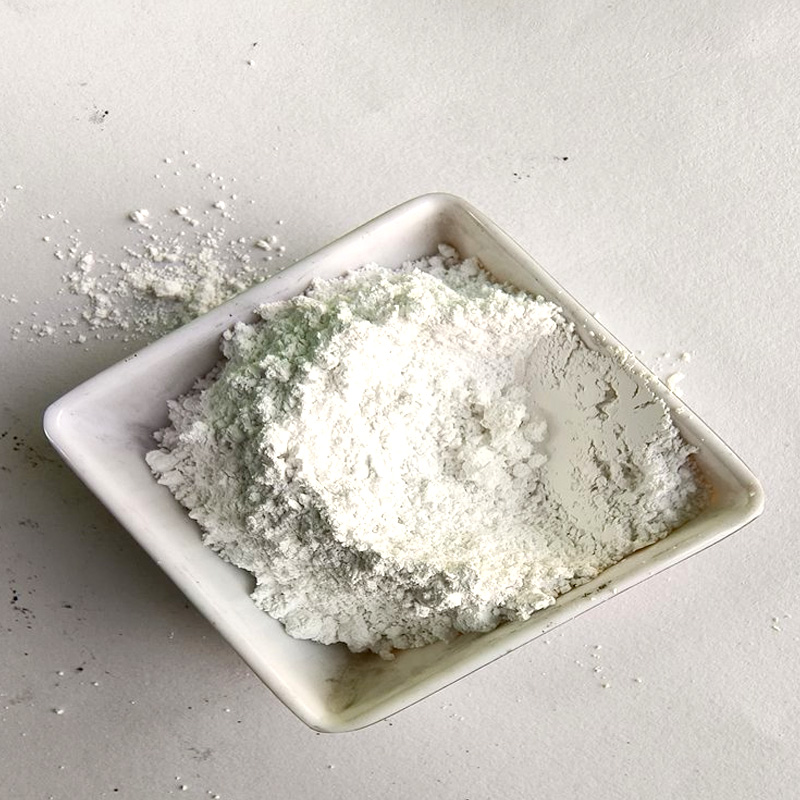
Diantimony trioxide CAS#1309-64-4
Dual Crystal Forms – Available in orthorhombic (valentinite) and cubic (senarmontite) structures, offering stable physical properties for diverse industrial applications.
High Thermal Stability – Melts at 656 °C and sublimes at elevated temperatures, ensuring reliable performance in high-temperature processing and refining operations.
Excellent Chemical Resistance – Practically insoluble in water and organic solvents, while readily soluble in acids and alkalis, enabling controlled reactivity in chemical formulations.
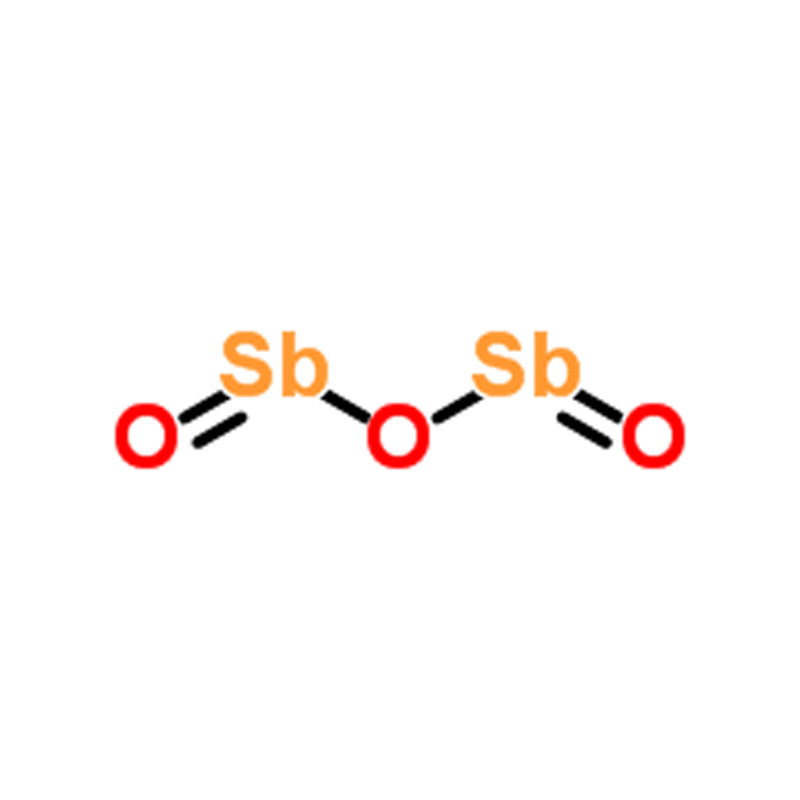
High Purity Optical Properties – High refractive index (2.087) and well-defined molecular structure (Sb₂O₆ dimers) support use in specialty glass, ceramics, and catalyst systems.
Diantimony trioxide CAS#1309-64-4
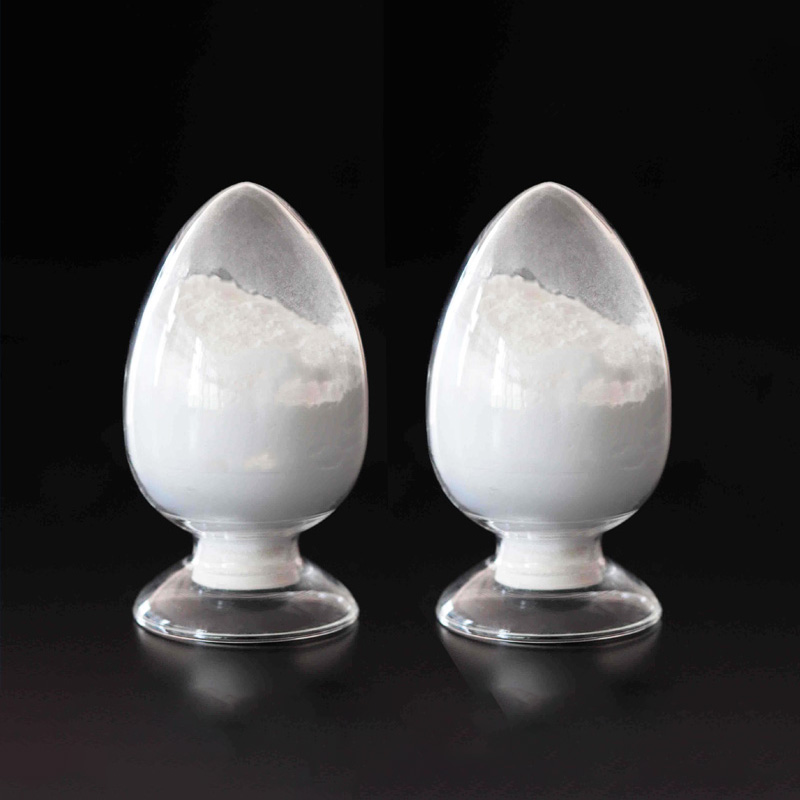
Occurs as colorless orthorhombic modifications, valentinite, or colorless cubic form, senarmontite; density 5.67 g/cm3 (valentinite), 5.20g/cm3 (senarmontite); cubic modification is dimeric consisting of Sb2O6 discrete molecules; refractive index 2.087; melts in the absence of oxygen at 656°C; boils at 1,550°C (sublimes); sublimes in vacuum at 400°C; very slightly soluble in water, insoluble in organic solvents; soluble in HCl, caustic alkalies and tartaric acid.
Diantimony trioxide Chemical Properties
| Melting point | 655 °C (lit.) |
| Boiling point | 1550 °C (lit.) |
| bulk density | 800-1300kg/m3 |
| density | 5.2 |
| vapor pressure | 13.3 hPa (660 °C) |
| Fp | 1550°C subl. |
| storage temp. | Store below +30°C. |
| solubility | 2.70mg/l |
| form | powder |
| color | White |
| Specific Gravity | 5.67 |
| Odor | wh. cubic or orthorhombic cryst., odorless |
| biological source | rabbit |
| Water Solubility | Slightly soluble. <0.1 g/100 mL at 20 ºC |
| crystal system | Cube |
| Merck | 14,711 |
| Space group | Fd3m |
| Lattice constant | a/nmb/nmc/nmα/oβ/oγ/oV/nm31.1141.1141.1149090901.3825 |
| Exposure limits | ACGIH: TWA 0.5 mg/m3 |
| NIOSH: IDLH 50 mg/m3; TWA 0.5 mg/m3 | |
| Stability: | Stable. |
| InChIKey | MUBFITUCTVFSOJ-UHFFFAOYSA-L |
| CAS DataBase Reference | 1309-64-4(CAS DataBase Reference) |
| IARC | 2B (Vol. 47) 1989 |
| NIST Chemistry Reference | Antimony trioxide(1309-64-4) |
| EPA Substance Registry System | Antimony trioxide (1309-64-4) |
| Safety Information | |
| Hazard Codes | Xn,Xi,T |
| Risk Statements | 40-61 |
| Safety Statements | 22-36/37-45-53 |
| RIDADR | 1549 |
| WGK Germany | 2 |
| RTECS | CC5650000 |
| Hazard Note | Irritant |
| TSCA | Yes |
| HazardClass | 6.1 |
| PackingGroup | III |
| HS Code | 28258000 |
| Hazardous Substances Data | 1309-64-4(Hazardous Substances Data) |
| Toxicity | LD50 orally in rats: >20 g/kg (Smyth) |
Safety Information
| Hazard Codes | Xn,Xi,T |
| Risk Statements | 40-61 |
| Safety Statements | 22-36/37-45-53 |
| RIDADR | 1549 |
| WGK Germany | 2 |
| RTECS | CC5650000 |
| Hazard Note | Irritant |
| TSCA | Yes |
| HazardClass | 6.1 |
| PackingGroup | III |
| HS Code | 28258000 |
| Hazardous Substances Data | 1309-64-4(Hazardous Substances Data) |
| Toxicity | LD50 orally in rats: >20 g/kg (Smyth) |

Product Application of Diantimony Trioxide CAS#1309-64-4
Diantimony trioxide (Sb₂O₃), also known as antimony oxide, is widely used as a flame-retardant additive in plastics. Although it occurs naturally, natural material is too impure for industrial use, so flame-retardant grades are produced by oxidizing antimony metal or sulfide ores in air at 600–800 °C. Processing conditions control particle size and reactivity, allowing the manufacture of different product grades. Typical purity ranges from 99.0% to 99.9% Sb₂O₃, with only trace levels of arsenic, lead, iron, nickel, and sulfates. It is insoluble in water and has very low moisture loss on drying.
Antimony trioxide has also long been used as a white pigment. In plastics, color tone and opacity can be adjusted by selecting grades with specific particle sizes: fine, uniform particles provide maximum whiteness and opacity, while coarser grades are suitable for producing translucent plastic products.
Factory and Equipment Show