Daidzein CAS#486-66-8
Natural Plant-Derived Ingredient: Daidzein is naturally sourced from leguminous plants such as soybean, red clover, and Pueraria roots, providing a reliable botanical origin.
Rich in Bioactive Soy Isoflavones: As one of the major soy isoflavones, daidzein is recognized as an important active component in soybean and radix puerariae extracts.
Traditional Herbal Application: Daidzein-containing radix puerariae has a long history of traditional use, valued for its applications in reducing fever, promoting saliva production, and relieving diarrhea.
Key Functional Compound in Pueraria Extracts: Daidzein, together with puerarin, is considered one of the primary active ingredients contributing to the effectiveness of radix puerariae formulations.
Daidzein CAS#486-66-8
Daidzein is primarily derived from leguminous plants, including soybean (dadou) seeds, red clover, and various Pueraria roots. Its medicinal significance was first documented in Shen Nong Ben Cao Jing around 2838 BC. As one of the major soy isoflavones, daidzein is also an important active component of radix puerariae (Gegen), the dried root of kudzu leguminous plants. Radix puerariae is traditionally known for its functions in reducing fever, promoting saliva secretion, and relieving diarrhea. Its chemical composition is complex and includes puerarin, xyloside, soy flavonoids, soybean flavonoid glycosides, beta-sitosterol, daidzin, and daidzein, with puerarin and daidzein considered the primary active constituents.
Daidzein Chemical Properties
| Melting point | 315-323°C (dec.) |
| Boiling point | 317.45°C (rough estimate) |
| density | 1.1629 (rough estimate) |
| refractive index | 1.4300 (estimate) |
| storage temp. | 2-8°C |
| solubility | DMSO: 10 mg/mL |
| pka | 7.01±0.20(Predicted) |
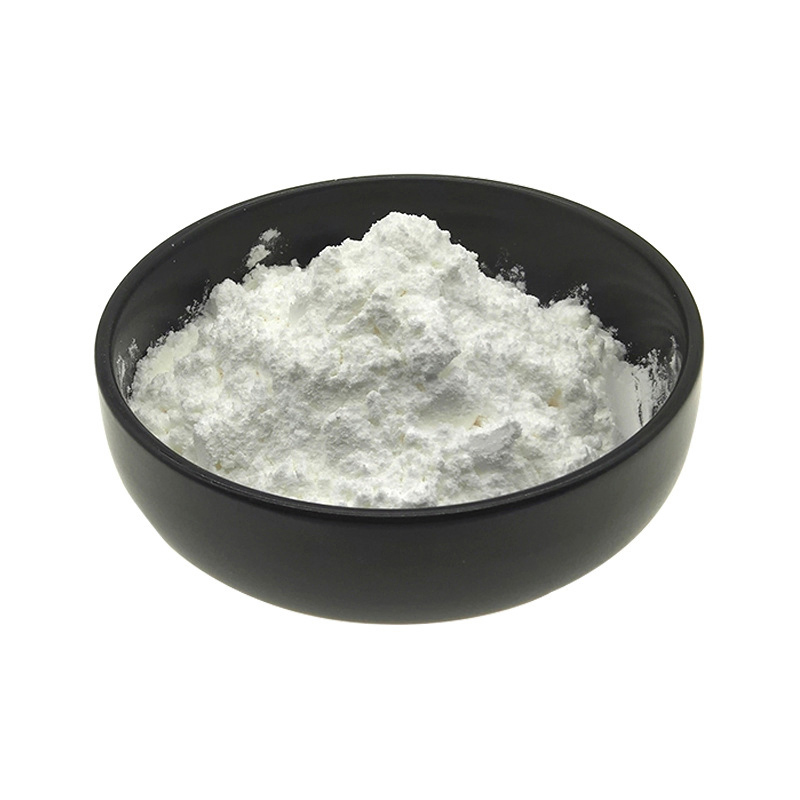
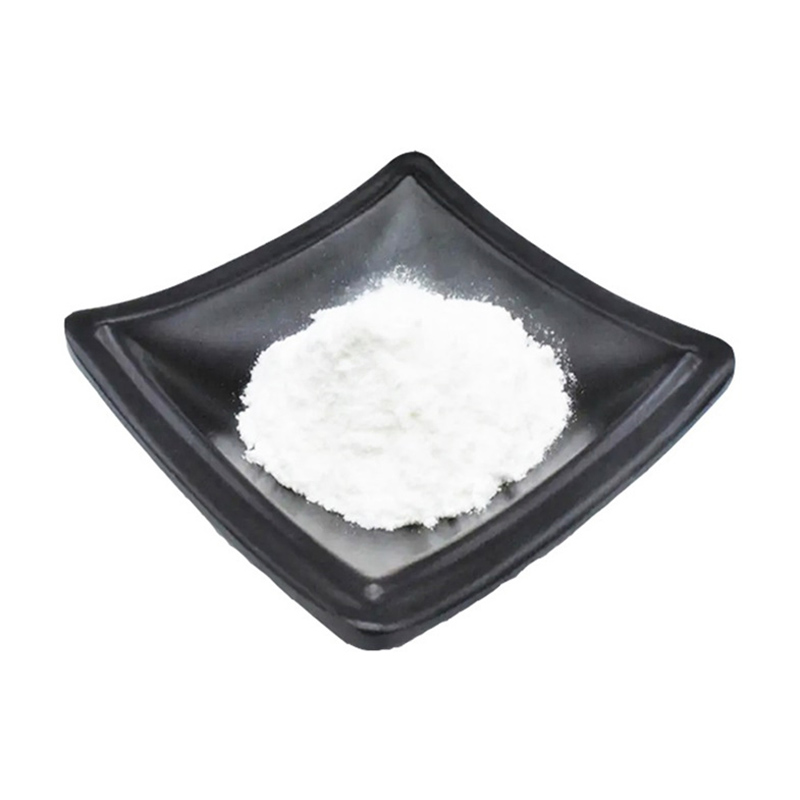
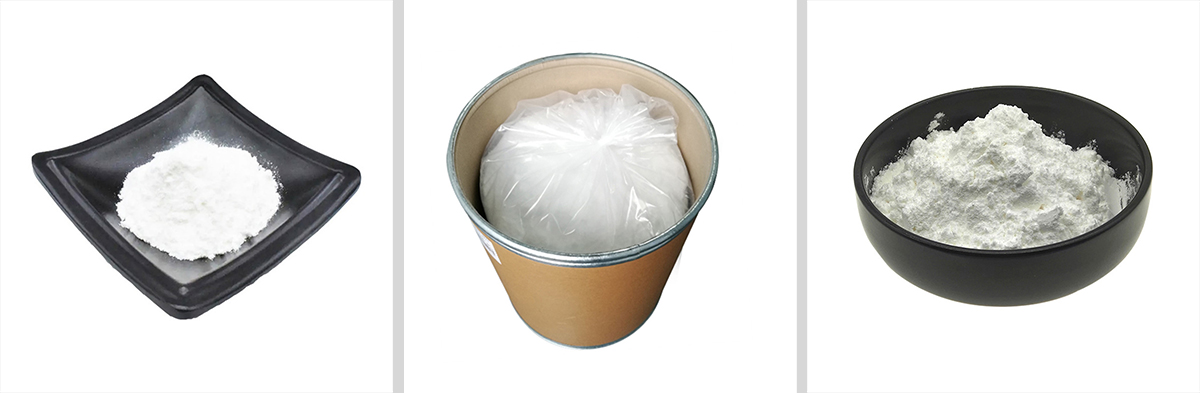
| form | Powder |
| color | White to off-white |
| biological source | synthetic |
| Water Solubility | insoluble |
| Merck | 142801 |
| BRN | 231523 |
| Major Application | food and beverages |
| Cosmetics Ingredients Functions | SKIN CONDITIONING - MISCELLANEOUS |
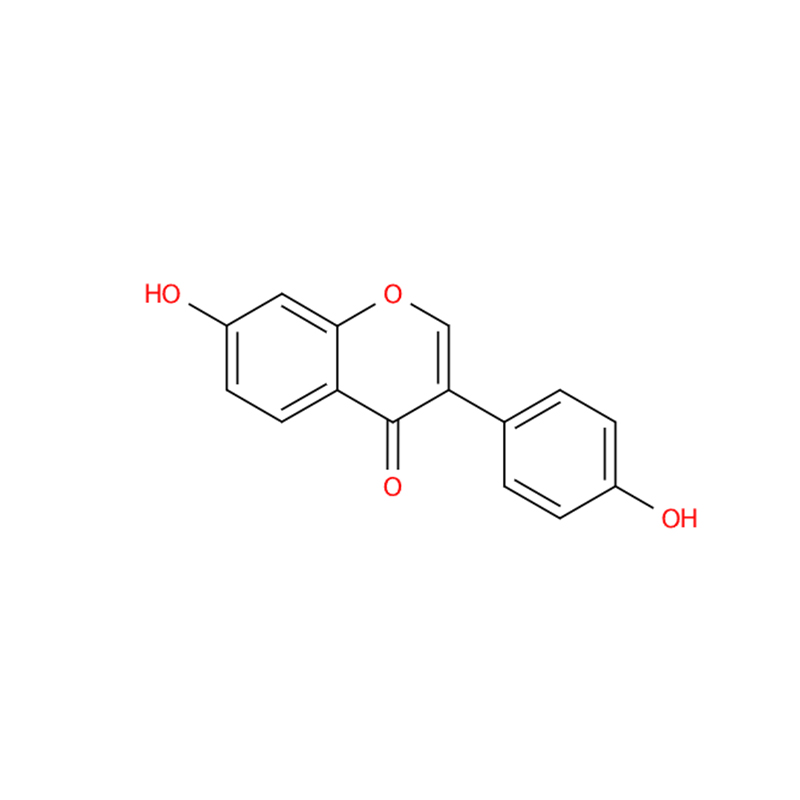
| InChI | 1S/C15H10O4/c16-10-3-1-9(2-4-10)13-8-19-14-7-11(17)5-6-12(14)15(13)18/h1-8,16-17H |
| InChIKey | ZQSIJRDFPHDXIC-UHFFFAOYSA-N |
| SMILES | Oc1ccc(cc1)C2=COc3cc(O)ccc3C2=O |
| LogP | 2.632 (est) |
| CAS DataBase Reference | 486-66-8(CAS DataBase Reference) |
| EPA Substance Registry System | 4H-1-Benzopyran-4-one, 7-hydroxy-3-(4-hydroxyphenyl)- (486-66-8) |
Safety Information
| Hazard Codes | Xi |
| Risk Statements | 36/38 |
| Safety Statements | 24-26-37/39 |
| WGK Germany | 3 |
| RTECS | DJ3100040 |
| HazardClass | IRRITANT |
| HS Code | 29329990 |
| Storage Class | 11 - Combustible Solids |
| Hazard Classifications | Eye Irrit. 2 |
| Skin Irrit. 2 |
Product Application of Daidzein CAS#486-66-8
Daidzein is a member of the isoflavone family. Together with other isoflavones such as genistein, it is naturally found in various plants and herbs. Soy isoflavones are a class of compounds extracted and isolated from soybeans. Daidzein functions as an inactive analog of Genistein (Cat. #G350000) and has been reported to block the G1 phase of the cell cycle in Swiss 3T3 cells through inhibition of casein kinase II activity. In addition, Daidzein has demonstrated inhibitory effects on the action of GABA in recombinant GABAA receptors. UV max: 250 nm (log ε 4.44).