Butyl rubber CAS#9010-85-9
High-Quality Copolymer Composition – Carefully formulated with isobutylene and a controlled amount of isoprene to deliver reliable and consistent material performance.
Controlled Manufacturing Process – Produced through a well-established copolymerization process using advanced catalyst technology to ensure stable product quality.
Enhanced Processing Stability – Treated with food-grade deagglomerating agents to improve particle handling, reduce agglomeration, and support efficient processing.
Low Residual Volatile Content – Thoroughly dried after production to remove residual volatiles, resulting in a cleaner and more stable final product.
Butyl Rubber CAS#9010-85-9
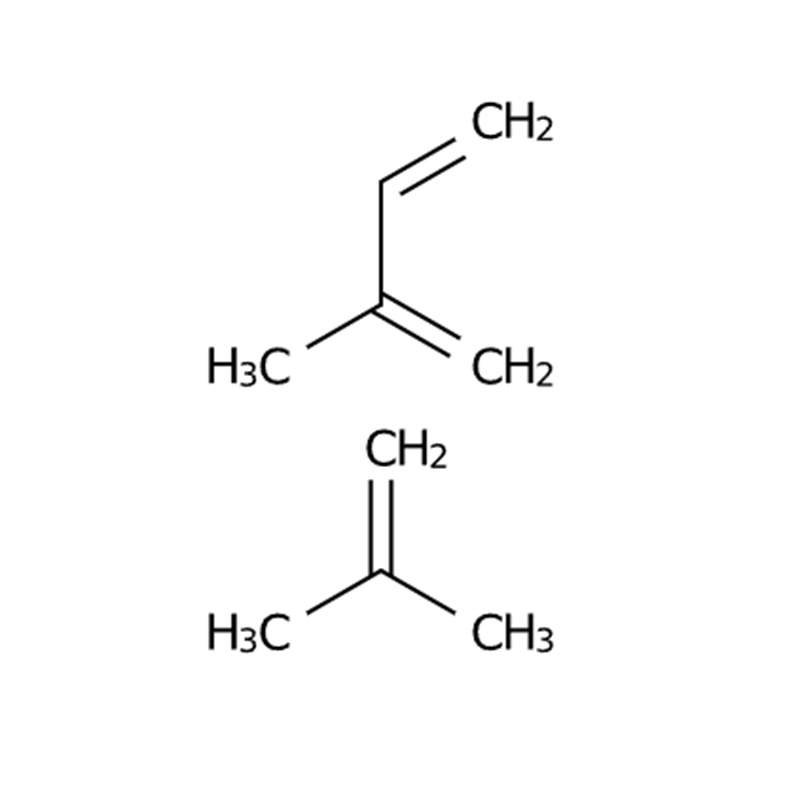
Butyl rubber is a synthetic copolymer composed of 0.5–2.0 mol% isoprene, with the balance consisting of isobutylene. It is produced by copolymerizing isobutylene and isoprene in a methyl chloride solution using aluminum chloride as the catalyst. After polymerization, the rubber particles are treated with hot water containing a suitable food-grade deagglomerating agent, such as stearic acid. The resulting coagulum is then dried to remove residual volatile substances, ensuring a stable final product.
Butyl rubber Chemical Properties
| density | 0.92 |
| Fp | 392 |
| form | Slab |
| Cosmetics Ingredients Functions | VISCOSITY CONTROLLING |
| Cosmetic Ingredient Review (CIR) | butyl rubber (9010-85-9) |
| LogP | 2.413 (est) |
| EPA Substance Registry System | 1,3-Butadiene, 2-methyl-, polymer with 2-methyl-1-propene (9010-85-9) |
| Risk Statements | 10 |
| Safety Statements | 16 |
| TSCA | TSCA listed |
Product Application of Butyl Rubber CAS#9010-85-9
Butyl rubber is produced by polymerizing isobutene (isobutylene) with small amounts of chloroprene, isoprene, or butadiene, and it may also be halogenated. The polymerization process is carried out in a closed system using aluminum chloride as the catalyst. Owing to its excellent gas impermeability, butyl rubber is widely used in the manufacture of inner tubes, tires, air chambers, adhesives, and dielectric materials. Isobutene is an anesthetic and asphyxiant gas, and exposure to high concentrations may cause asphyxia. Under such conditions, there is also a risk of explosion.