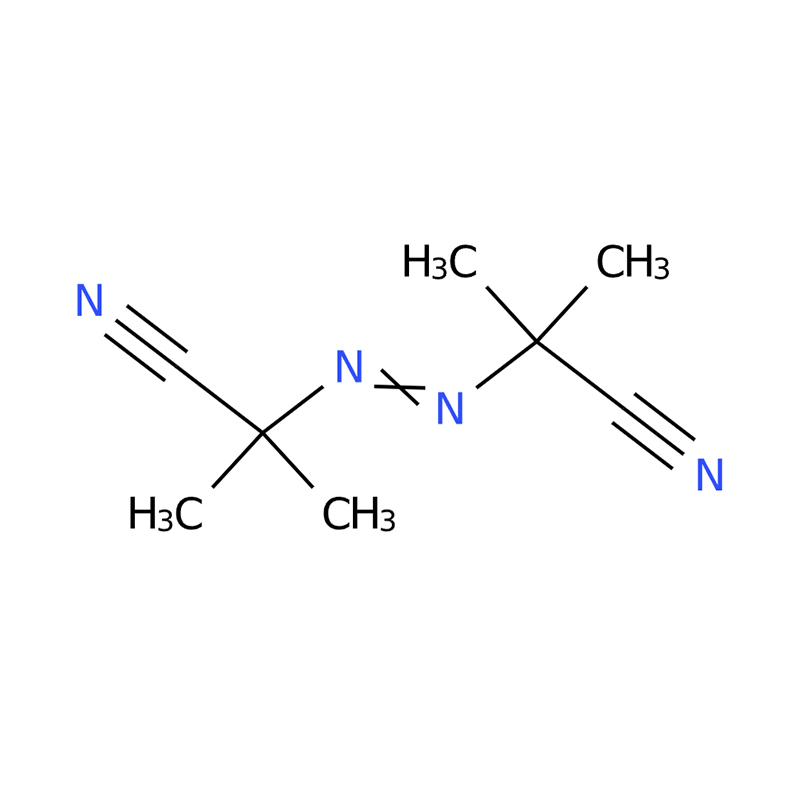

2,2'-Azobis(2-methylpropionitrile) CAS#78-67-1
Effective Radical Initiator: AIBN is widely used as a radical initiator in vinyl polymerizations and other chemical reactions.
Versatile Solubility: It is soluble in alcohols and many common organic solvents, allowing flexible use in various formulations.
Foaming and Blowing Agent: AIBN functions effectively as a foamer and blowing agent in plastics and rubber production.
High Reactivity for Industrial Applications: Its ability to ignite readily and burn persistently makes it suitable for catalytic and polymerization processes.
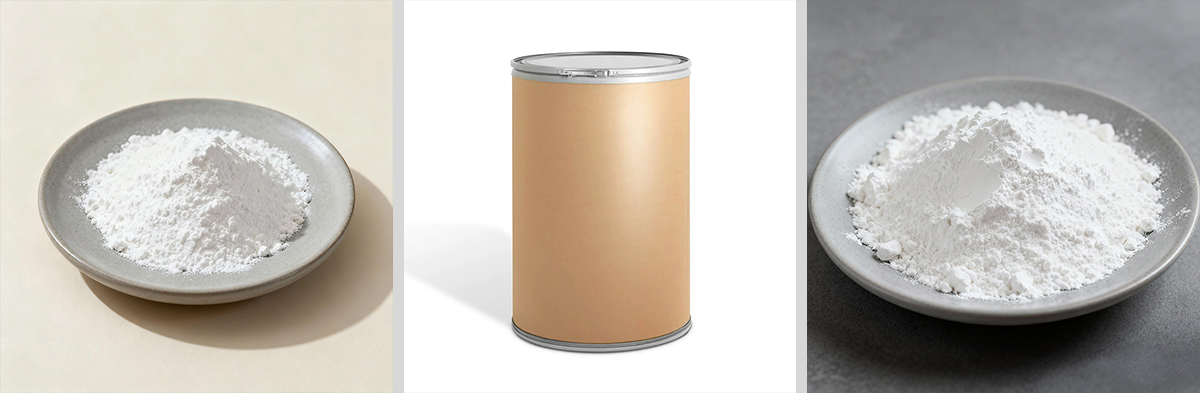
Parameters
| Melting point | 102-104 °C (dec.)(lit.) |
| Boiling point | 281.68°C (rough estimate) |
| density | 1.11 |
| vapor pressure | 0.81Pa at 24.85℃ |
| refractive index | n20/D1.495 |
| Fp | 4℃ |
| storage temp. | 2-8°C |
| solubility | Chloroform (Slightly), Methanol (Slightly) |
| form | Solid |
| color | Crystals from EtOH |
| Odor | odorless |
| Water Solubility | Insoluble |
| Merck | 13920 |
| BRN | 1708400 |
| Stability: | Stability Flammable solid. Shock sensitive. Thermally unstable. May be explosive in combination with acetone or heptane. Incompatible with oxidizing agents. |
| InChIKey | OZAIFHULBGXAKX-VAWYXSNFSA-N |
| LogP | 1.1 at 25℃ |
| CAS DataBase Reference | 78-67-1(CAS DataBase Reference) |
| NIST Chemistry Reference | 2,2'-Azo-bis-isobutyronitrile(78-67-1) |
| EPA Substance Registry System | Azobis(isobutyronitrile) (78-67-1) |
Safety Information
| Hazard Codes | E,Xn,F,Xi |
| Risk Statements | 2-11-20/22-52/53-67-65-48/20-38-63-66-36 |
| Safety Statements | 39-41-47-61-62-36/37-16-26 |
| RIDADR | UN 3234 4.1 |
| WGK Germany | 2 |
| RTECS | UG0800000 |
| F | 4.4 |
| HazardClass | 4.1 |
| PackingGroup | II |
| HS Code | 29269090 |
| Hazardous Substances Data | 78-67-1(Hazardous Substances Data) |
| Toxicity | LDLo orl-rat: 670 mg/kg 34ZIAG 0,117,69 |

Product Application of 2,2'-Azobis(2-methylpropionitrile) CAS#78-67-1
2,2'-Azobis(2-methylpropionitrile) (AIBN) is widely used as an initiator in radical polymerization due to its ability to undergo homolytic cleavage and generate molecules with high activation energy. AIBN is the most commonly employed azo initiator, characterized by a relatively stable decomposition reaction that produces a single type of free radical with minimal induced decomposition. This property makes it particularly suitable for studying the kinetics of free radical polymerization.