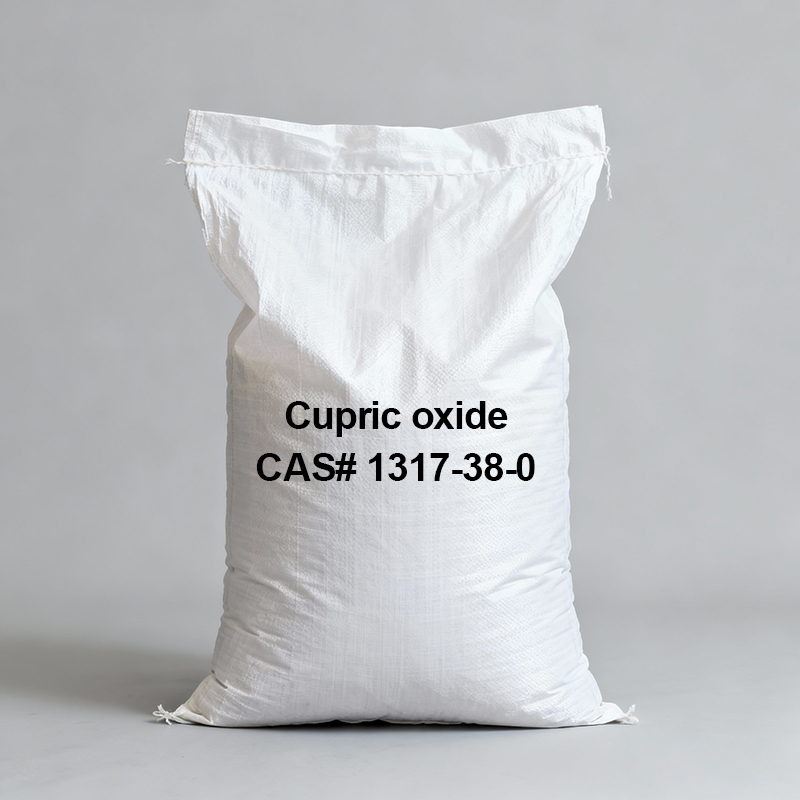

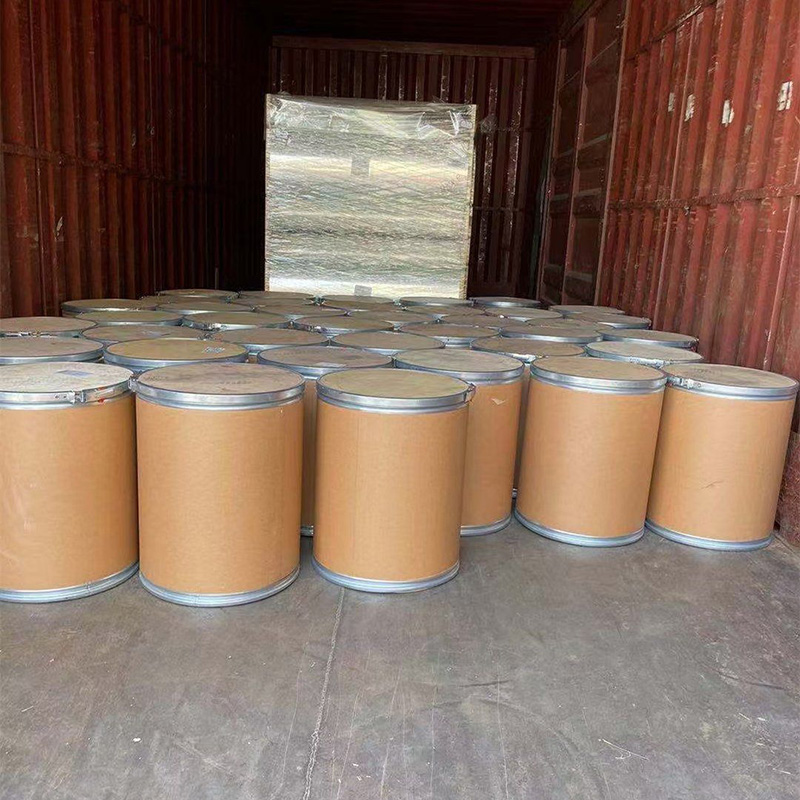
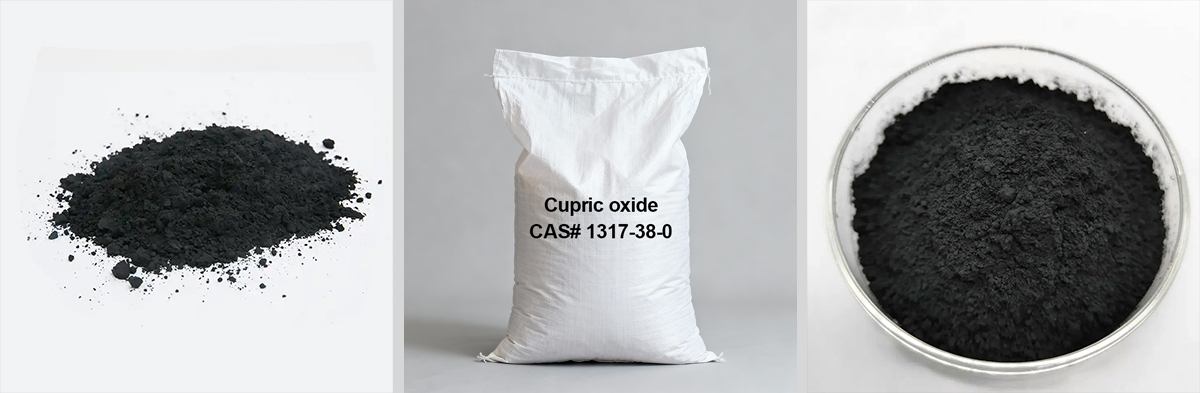

Cupric oxide CAS# 1317-38-0

  • Excellent Ceramic Pigment – Provides stable blue-green coloration widely used in ceramic glazing and decorative applications.

  • Versatile Industrial Intermediate – Acts as an important precursor for various copper-based products and chemical processes.

  • Effective Antifouling and Wood Protection Agent – Used in antifouling paints for boat hulls and for protecting wood structures in freshwater and marine environments.

  • Wide Range of Industrial Uses – Suitable for applications such as catalyst production, battery manufacturing, and preparation of superconducting materials.


Product Details

Cupric Oxide CAS# 1317-38-0

Copper(II) oxide is widely used as a blue-green pigment in ceramics. As a naturally occurring compound obtained from mining, it also serves as a precursor for various copper-based applications, including fungicides and wood preservatives. In this role, it is employed as an antifouling agent for boat hulls and for protecting wood in outdoor, freshwater, and marine constructions.

Although sometimes used in animal feed, its copper bioavailability is lower than that of compounds like cupric acetate and alkaline copper carbonate. Additional applications include superconductor preparation, battery manufacturing, and serving as a catalyst in various industrial processes.

Cupric oxide CAS# 1317-38-0

Cupric oxide Chemical Properties

Melting point 1326 °C
Bulk density500kg/m3
Density 6.315
Refractive index 2.63
Storage tempno restrictions.
Solubility Aqueous Acid (Slightly), Methanol (Slightly)
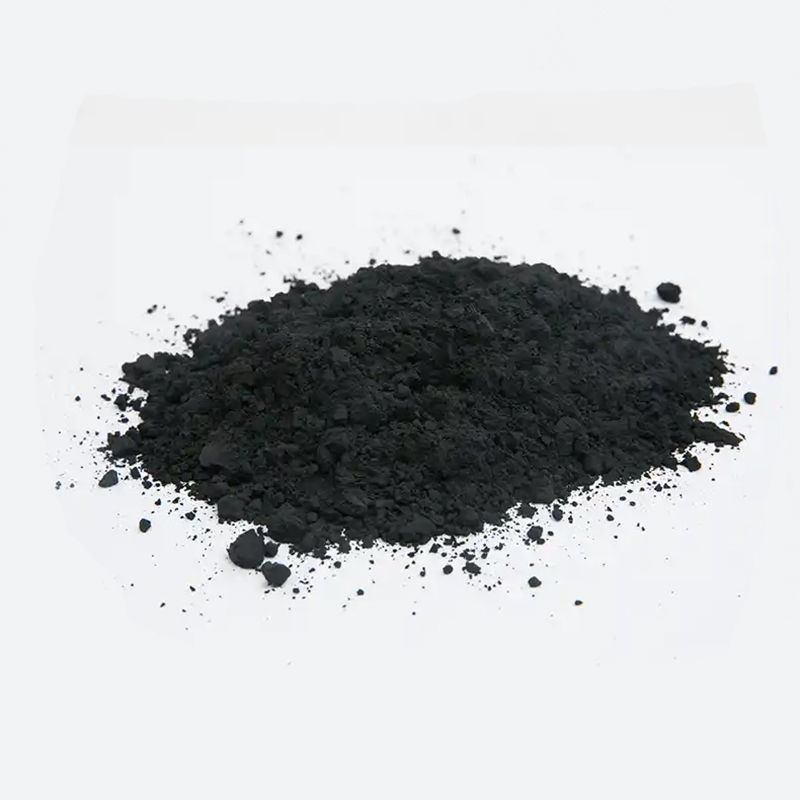
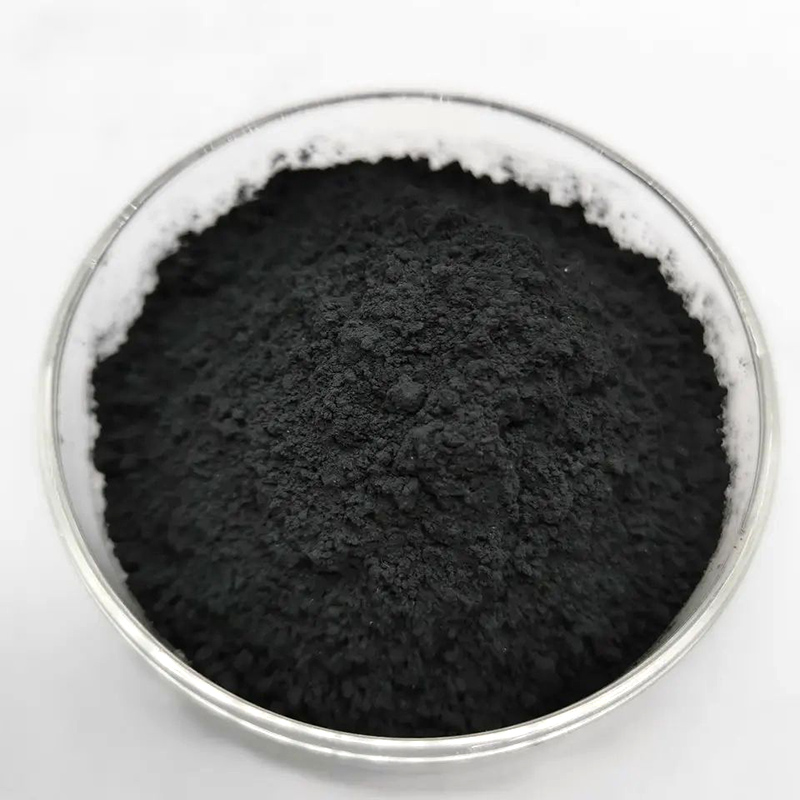
Form powder
Color Brown to black
Specific Gravity6.3-6.49
Odorat 100.00?%. odorless
PH7 (50g/l, H2O, 20℃)(slurry)
Water Solubility insoluble
Merck 142646
Crystal systemMonoclinic
Space groupC2/c
Lattice constanta/nmb/nmc/nmα/oβ/oγ/oV/nm30.468370.342260.512889099.54900.0811
Exposure limitsACGIH: TWA 1 mg/m3
NIOSH: IDLH 100 mg/m3; TWA 0.1 mg/m3; TWA 1 mg/m3
Dielectric constant18.1(Ambient)
Stability:Stable. Incompatible with reducing agents, hydrogen sulfide, aluminium, alkali metals, finely powdered metals.
Major Applicationbattery manufacturing
Cosmetics Ingredients FunctionsANTIMICROBIAL
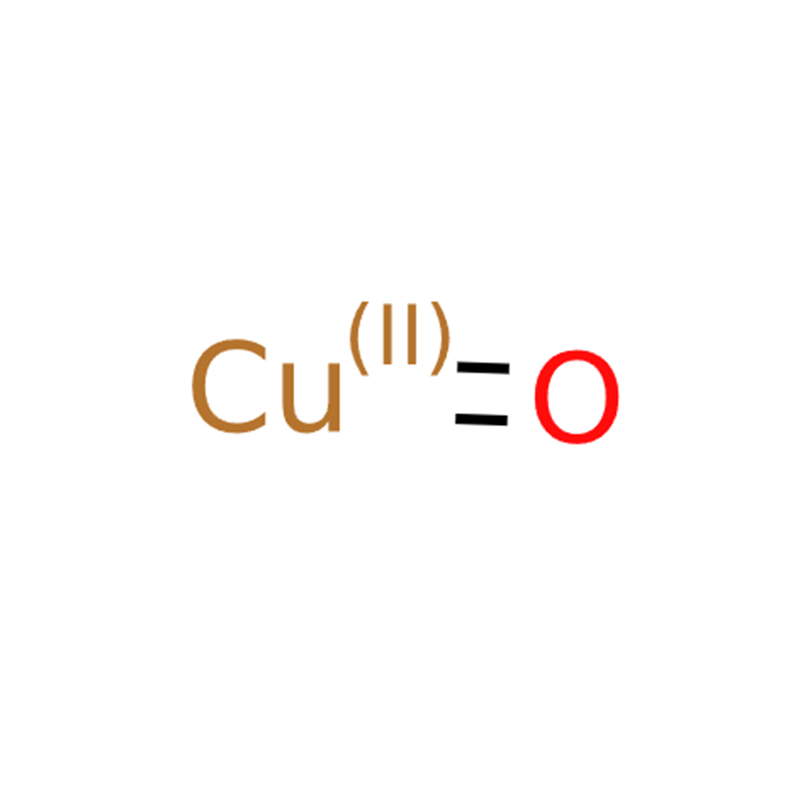
InChI1S/Cu.O
InChIKeyQPLDLSVMHZLSFG-UHFFFAOYSA-N
SMILES[Cu]=O
CAS DataBase Reference1317-38-0(CAS DataBase Reference)
NIST Chemistry ReferenceCopper(ii) oxide(1317-38-0)
EPA Substance Registry SystemCupric oxide (1317-38-0)

Safety Information

Hazard Codes Xn,Xi,N
Risk Statements 22-37-50
Safety Statements 22-36-61-60-29
OEBD
OELTWA: 0.1 mg/m3
RIDADR UN 3077 9 / PGIII
WGK Germany 1
RTECS GL7900000
TSCA TSCA listed
HazardClass 9
HS Code 28255000
Storage Class13 - Non Combustible Solids
Hazard ClassificationsAquatic Acute 1
Aquatic Chronic 1
Hazardous Substances Data1317-38-0(Hazardous Substances Data)
ToxicityLD50 orally in Rabbit: 470 mg/kg
IDLA100 mg Cu/m3

Cupric oxide CAS# 1317-38-0

Product Application of Cupric Oxide CAS# 1317-38-0

Copper(II) oxide is primarily used as a blue-green pigment in ceramics. Being a naturally occurring compound obtained from mining, it also serves as a precursor for other copper-based applications, including fungicides and wood preservatives. In this capacity, it is applied as an antifouling agent for boat hulls and for the protection of outdoor, freshwater, and seawater wood structures.

Although occasionally used in animal feed, its copper bioavailability is lower compared to other compounds such as cupric acetate and alkaline copper carbonate. Additional applications include superconductor production, battery manufacturing, and use as a catalyst in various industrial processes.
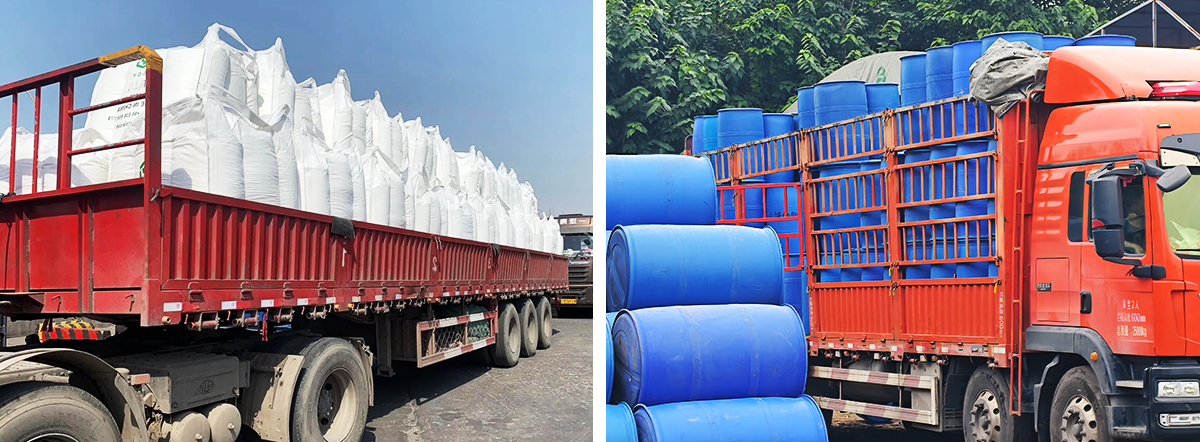
Cupric oxide CAS# 1317-38-0

Leave your messages

Related Products

x

Popular products

x